

This soft, moist gluten-free brioche bread recipe is rich with butter, eggs, and milk. It's easy to make in a stand mixer; no bread machine needed! The loaf remains fresh and moist without crumbling, even beyond the next day!
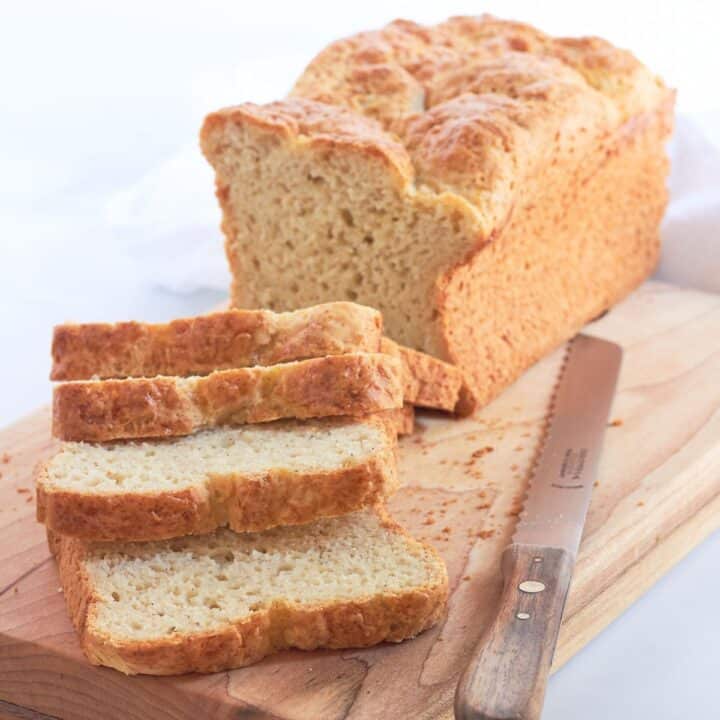
Gluten-Free Yeast Bread
If you've been intimidated by the idea of making yeast bread, cast those fears aside! It's actually easier to make gluten-free yeast bread than the traditional wheat variety. Learn how easy it is with these gluten-free yeast Bread Tips.
Jump to:
Gluten-Free Brioche Bread Ingredients
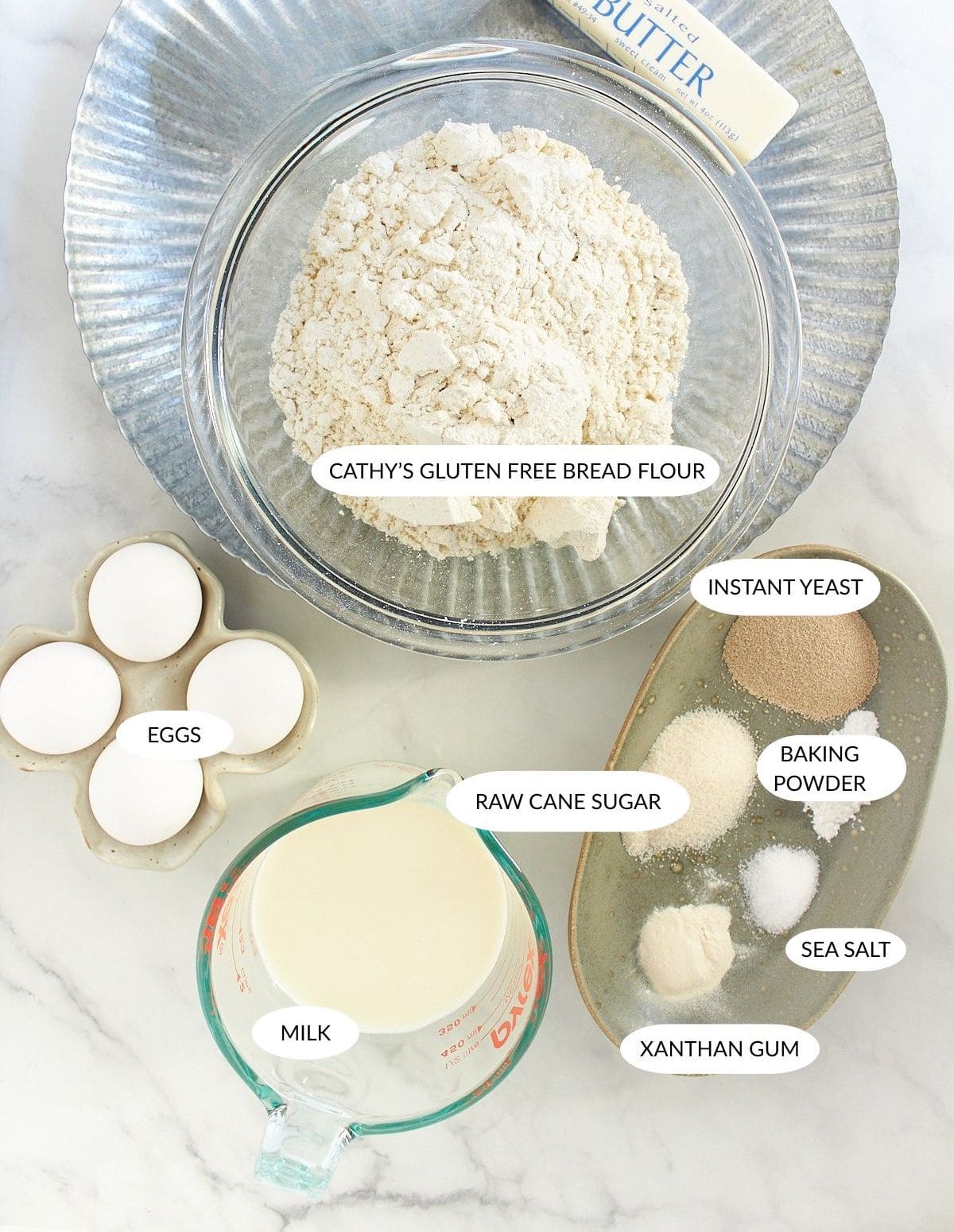
I have made the recipe several times, tweaking it as I went along to simplify and customize it to my liking.
As an Amazon Associate, I earn from qualifying purchases.
- Cathy's Gluten-Free Bread Flour Blend - This is the blend I prefer for taste, texture, and convenience. If you don't want to mix up a batch of it, I have also listed individual flours that work well in this recipe, below.
- Instant Yeast - This is different from active dry yeast. I prefer it because it can be mixed directly with the other dry ingredients.
- Sugar - As I do with most things, I reduced the amount of sugar compared to other recipes and specified minimally processed raw cane sugar in mine.
- Milk - For dairy-free, use any dairy-free nut milk beverage.
- Eggs - Bring your eggs to room temperature. Review the directions before you begin, paying attention to how the eggs are used.
- Xanthan Gum - While there is psyllium husk in my flour blend, gluten-free brioche benefits from some additional gum.
See the recipe card for quantities.
Dairy-Free Brioche
Although I can tolerate some dairy products now, I have found that any dairy-free nut milk beverage works fine for this bread. I make mine with butter, because although I don't tolerate the casein in dairy well, I can eat butter. Since traditional French brioche is rich in butter, I kept that in my recipe. If you simply can't have dairy of any kind, replace the butter with avocado oil. You won't notice much difference.
More Gluten-Free Yeast Recipes that Use Cathy's Gluten-Free Bread Flour Blend
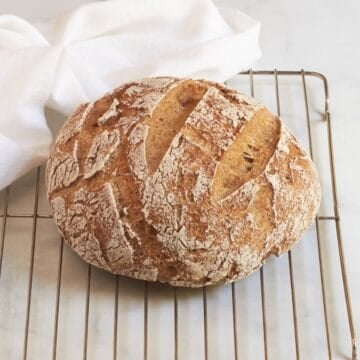
Gluten-Free Brioche Loaf Instructions
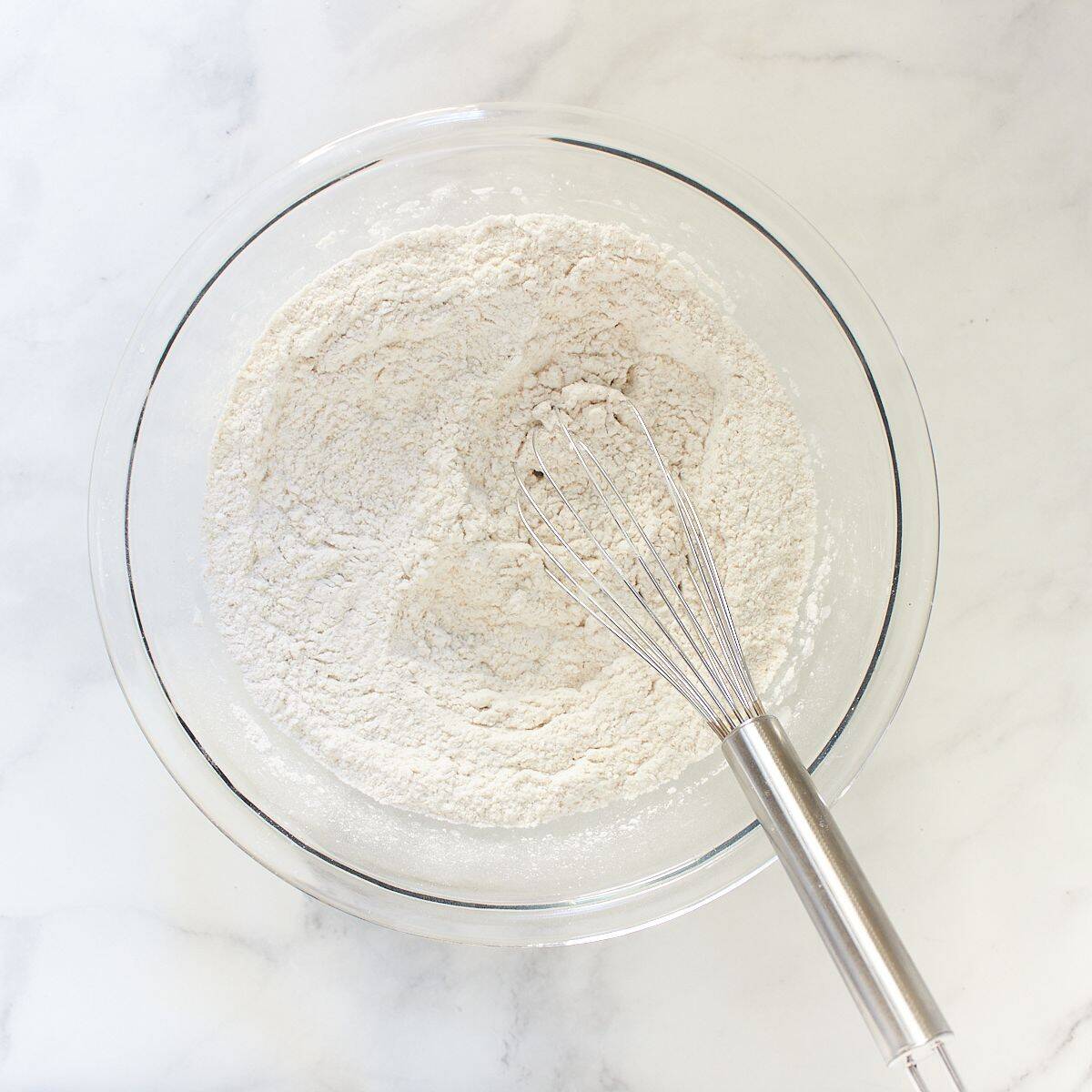
Whisk the flour and other dry ingredients together in a mixing bowl.
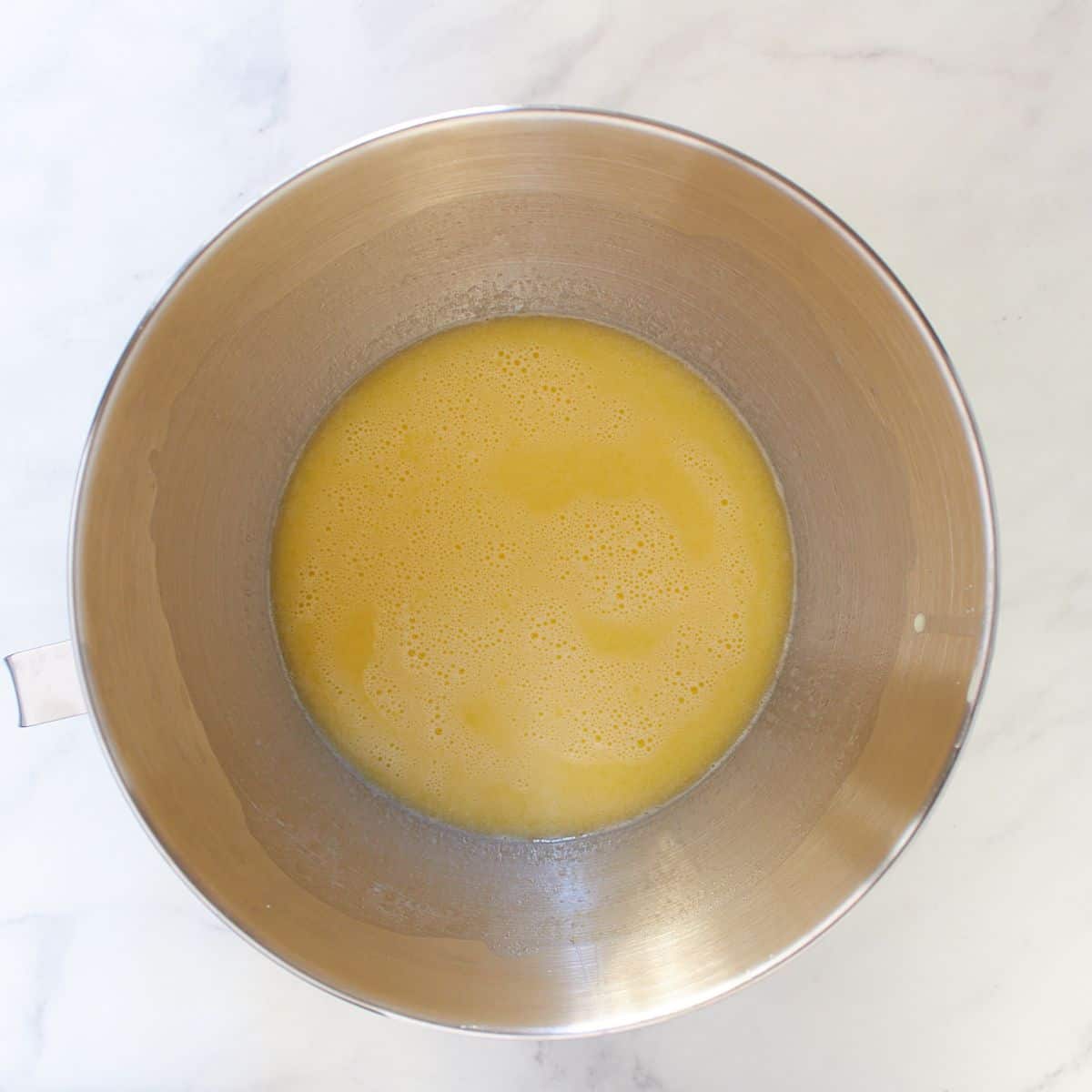
Meanwhile, beat the eggs. Then, add the milk-and-butter mixture.
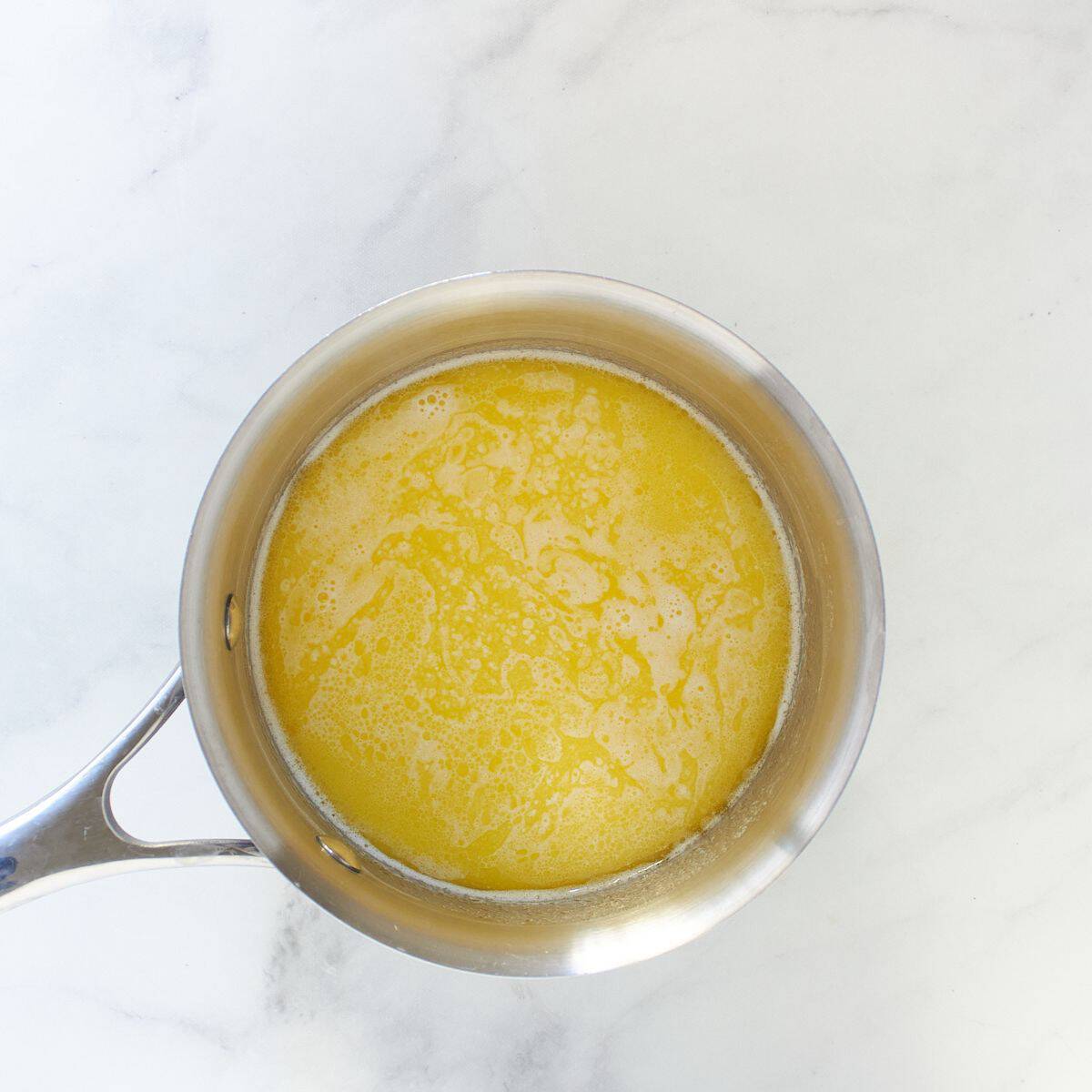
Melt the butter. Add milk and leave until it reaches 110℉ (43℃).
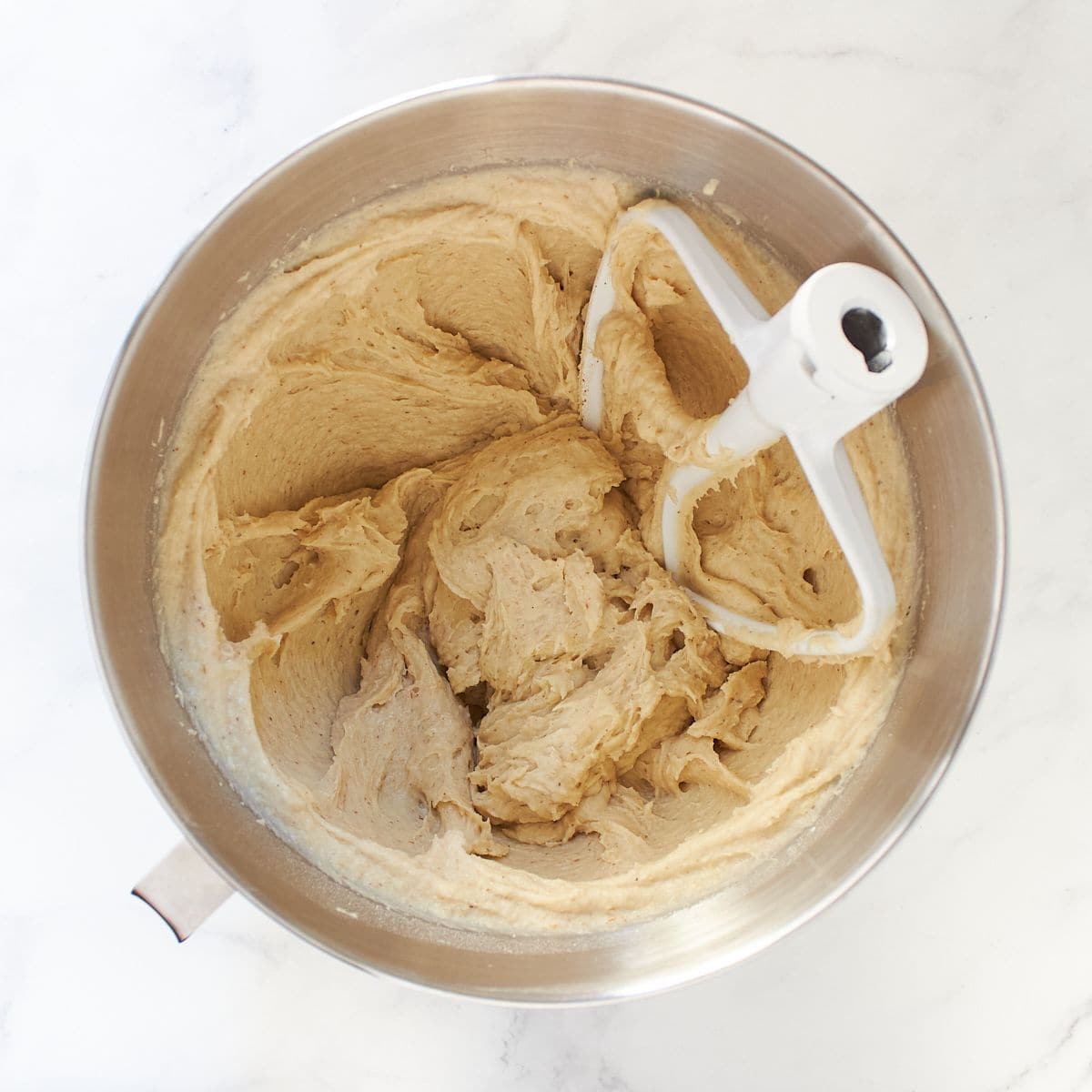
Beat the dry mixture into the wet mixture for 5 minutes.
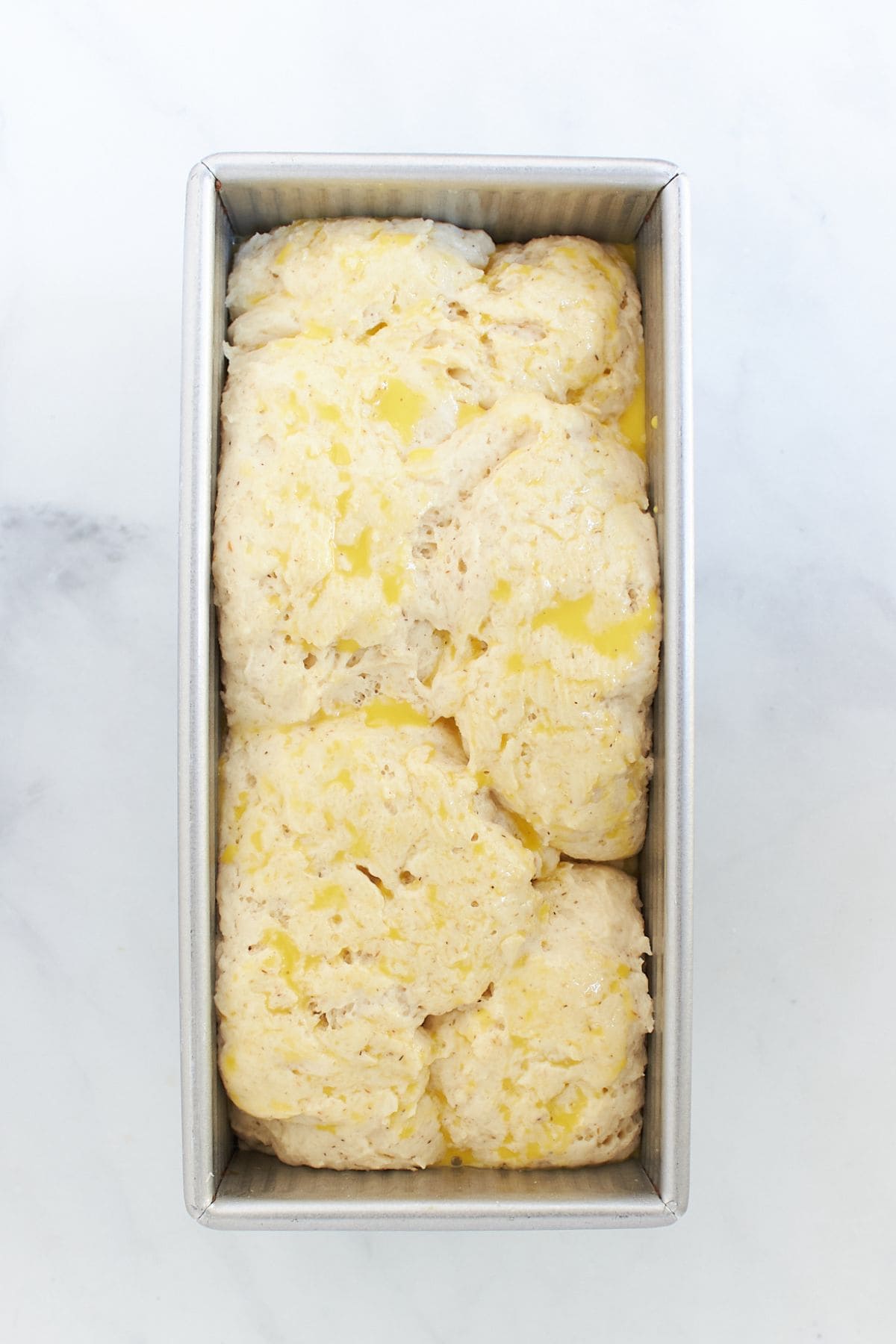
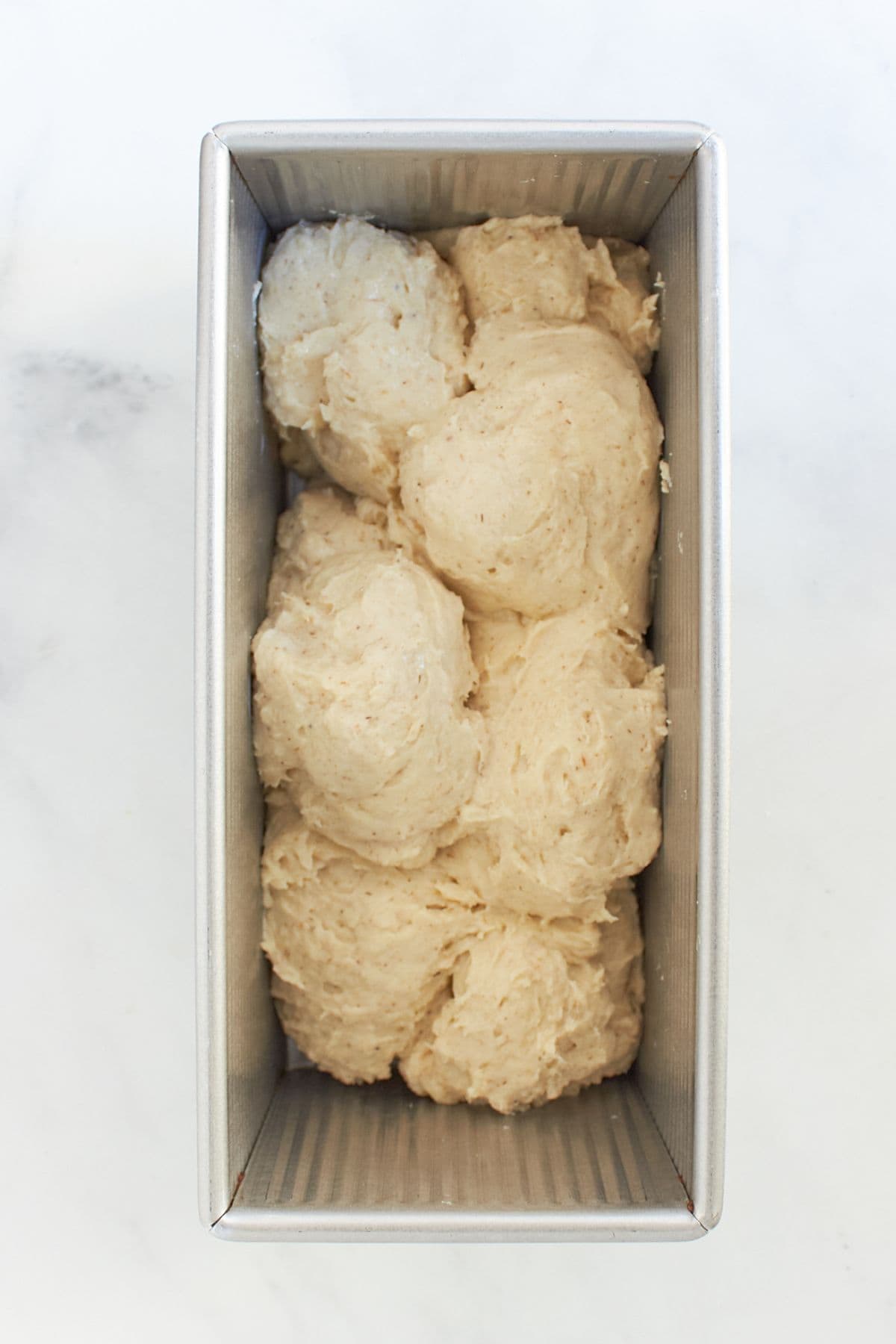
Scoop the batter into a prepared loaf pan. Cover it loosely and set it in a warm place to proof.
Once the dough has risen, brush it gently with an egg-water wash and bake it in a preheated oven.
Because this gluten-free dough is very soft and results in a beautiful, moist bread, it's more like a batter. Therefore, it doesn't lend itself to shaping into separate rolls or a braid. However, since it is a brioche, I scooped the batter into the pan in individual mounds to give the loaf that rounded brioche look. This is entirely optional, of course.
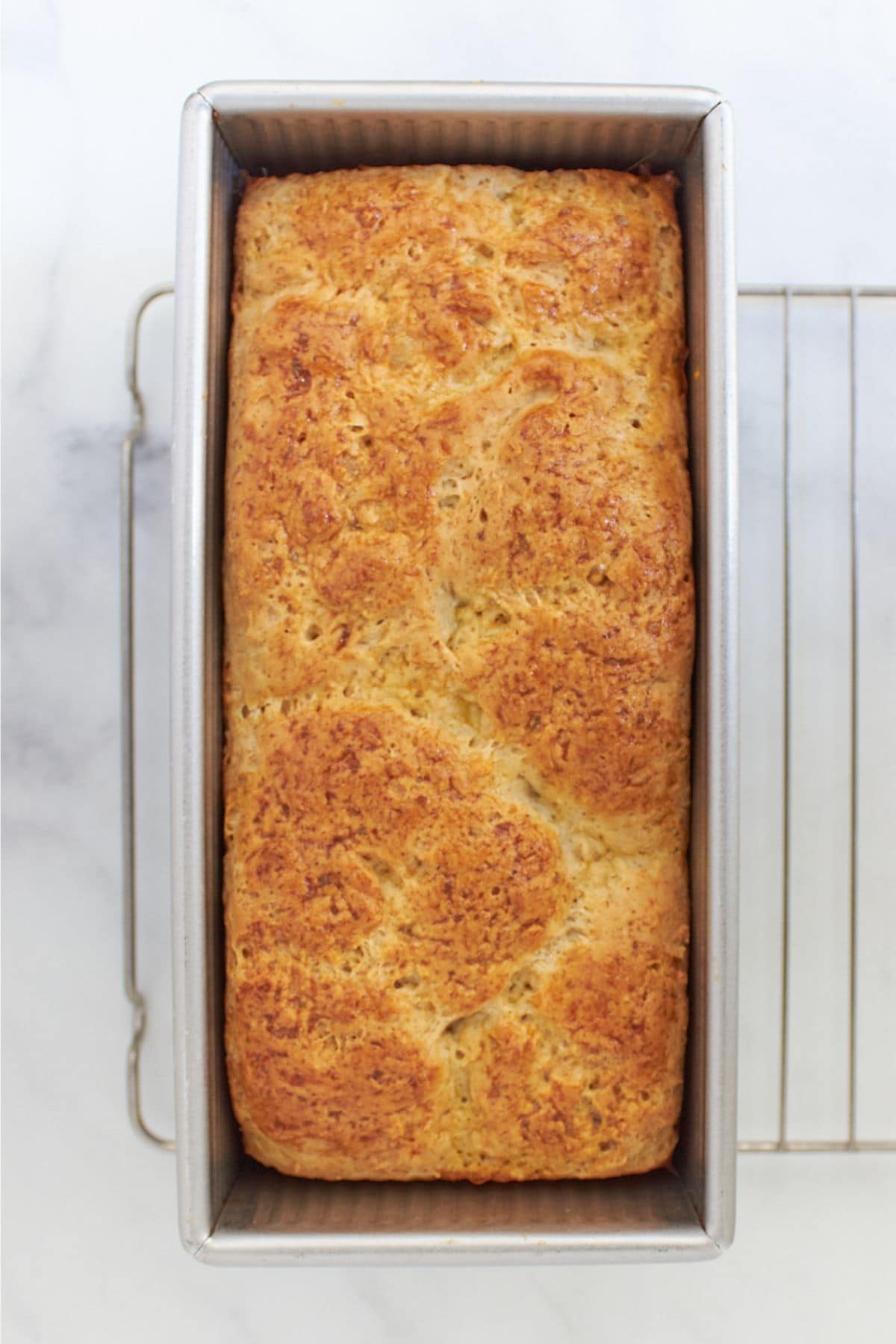
Let your loaf cool for about 10 minutes, remove it from the pan, and then allow it to cool completely before you slice it.
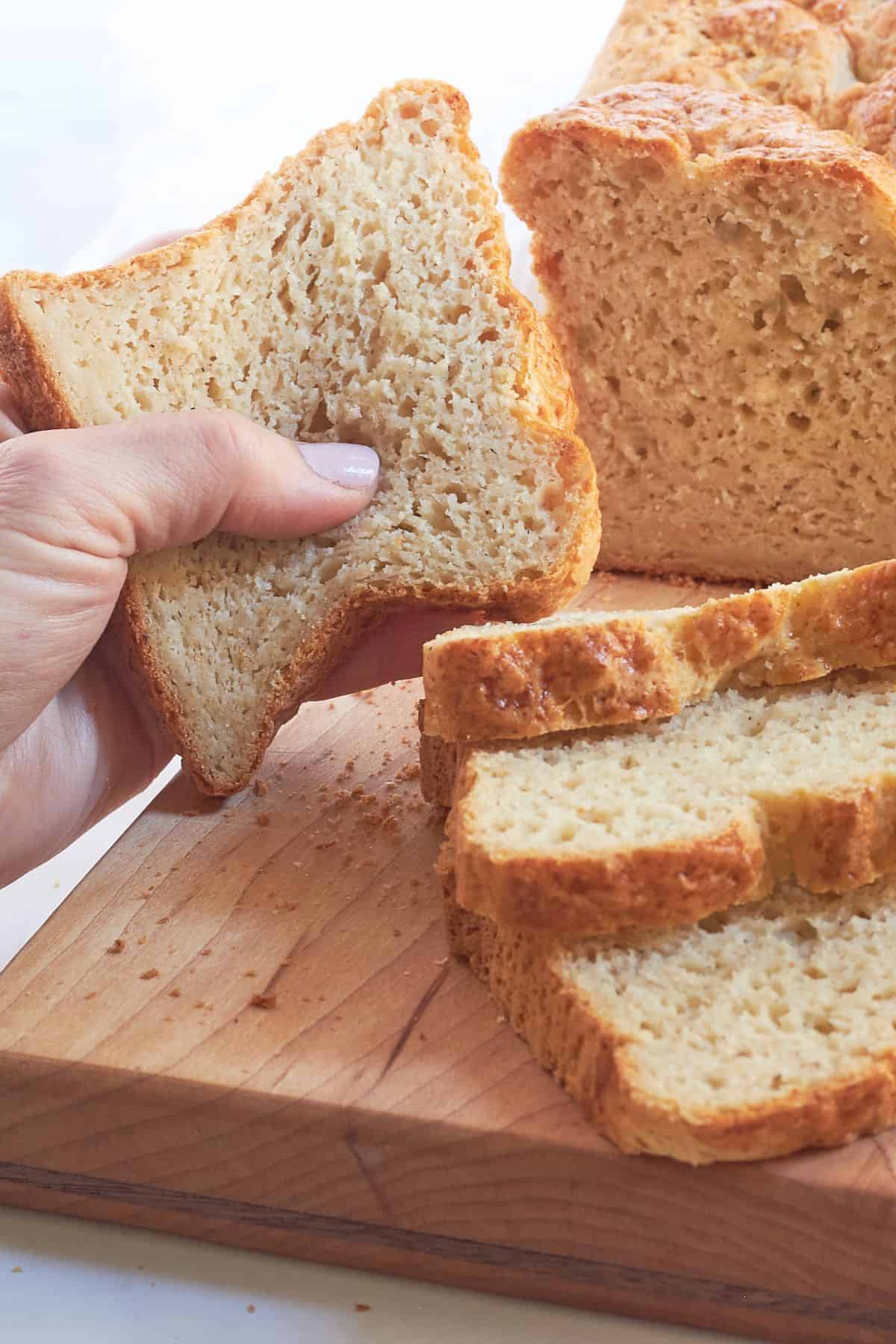
Top Tips for Yeast Bread Baking
Here are some tips to help you with successful gluten-free yeast bread baking.
- The temperature of the water should be 105°F (41°C) to 115°F (46°C) when it comes into contact with the yeast.
- Don't allow the liquid to be too hot, or it will destroy the yeast.
- An ideal environment for proofing bread dough is 75°F (24°C)to 85°F (30°C). Bread rises much better in a warm, humid environment.
- Don't allow the dough to get a chill or cold draft during the rising process. Protect it from cold air, such as from an outside door opening in winter or air conditioning vents in summer.
- Gluten-free bread doesn't need to be kneaded like wheat bread because there is no gluten to develop. It does need to be mixed until the batter is smooth and consistent, and the moisture is evenly absorbed. A stand mixer with a dough hook is ideal for this job.
- Weigh your ingredients for accuracy. Volume (cups) measurements can fluctuate wildly and lead to disappointing results.
Individual Gluten-Free Flours
If you would rather make this bread with the individual flours of the original recipe, I'm listing them and explaining recipe adjustments here.
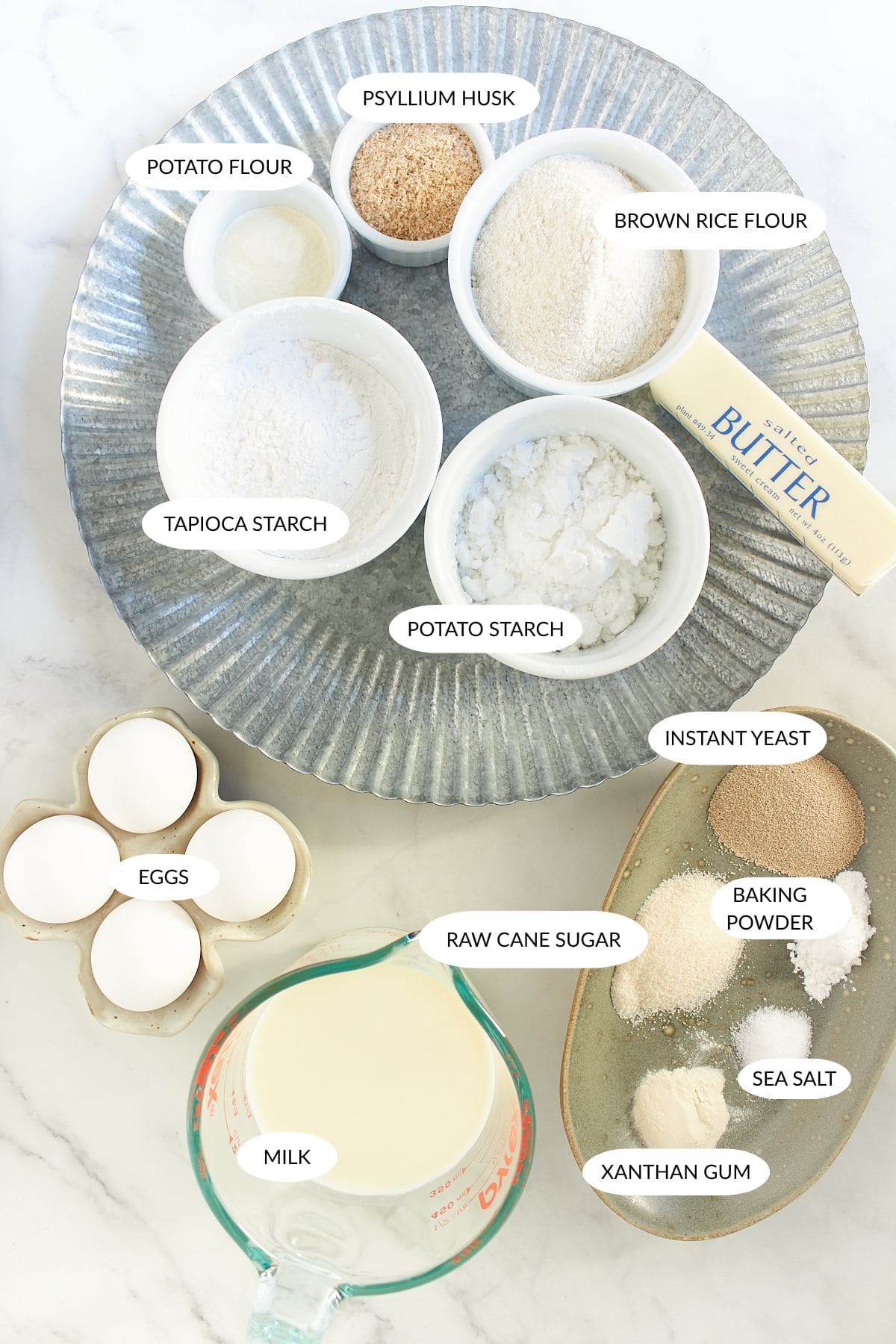
- 1 cup (156 g) brown rice flour
- ¾ cup (105 g) potato starch
- ¾ cup (90 g) tapioca starch
- 1 tablespoon (10 g) potato flour
- 1 tablespoon (15 g) xanthan gum (instead of the teaspoon in this recipe)
- 3 tablespoons (15 g) psyllium husk
Whisk together these ingredients and use them in place of Cathy's Gluten-Free Bread Flour Blend, replacing the teaspoon of xanthan gum with a tablespoon of it. Remember to add the sugar, yeast, baking powder, and salt as listed in the recipe.
Storage
Once your gluten-free brioche loaf has cooled, store it, sealed in an airtight container, at room temperature. As with any homemade bread, I would recommend slicing and freezing it to keep it longer.
Recipe FAQ's
Yes, unless you get brioche that is specifically made gluten-free, regular brioche contains lots of gluten.
Yes, delicious gluten-free brioche is certainly possible. However, don't just substitute a gluten-free flour for wheat flour in a regular recipe. Follow a good recipe that has been specifically developed with a particular gluten-free flour blend and use that flour in the recipe.

Equipment
While this bread is really quite simple to make, there is some equipment that can make your job much easier and your results more successful.
- Stand Mixer - A stand mixer saves you a lot of work and is especially helpful for gluten-free baking. I think it's much more useful than a bread machine.
- Kitchen Scale - An inexpensive kitchen scale not only helps to ensure successful baking, but it also makes the measuring of ingredients much easier. You don't need all the various sizes of cups. Just reset it to zero with each ingredient you add, and pour it in carefully.
- Instant-read Thermometer - This helps you to keep the liquid at just the right temperature to activate the yeast.
As an Amazon Associate, I earn from qualifying purchases.
Recipe
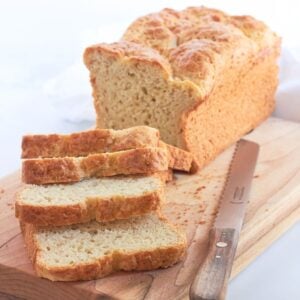
Gluten-Free Brioche Bread
Equipment
- 9" X 4" X 4" Loaf Pan (23-X10-X10-cm)
Ingredients
Dry Ingredients
- 2 ¾ cups Cathy's Gluten-Free Bread Flour Blend + 1 tablespoon
- 1 tablespoon raw cane sugar
- 1 tablespoon instant yeast
- 1 teaspoon xanthan gum
- 1 teaspoon baking powder
- ½ teaspoon fine sea salt
Wet Ingredients
- ½ cup butter (Use avocado oil for dairy free.)
- 1 ⅜ cups milk (You may use your nondairy milk of choice.)
- 2 large eggs
- 2 egg whites
Egg Wash
- 1 egg yolk
- 1 tablespoon water
Instructions
- Whisk together all of the dry ingredients in a mixing bowl.2 ¾ cups Cathy's Gluten-Free Bread Flour Blend1 tablespoon raw cane sugar1 tablespoon instant yeast1 teaspoon xanthan gum1 teaspoon baking powder½ teaspoon fine sea salt
- Melt the butter in a small saucepan on the stovetop over medium heat. When it has melted, add the milk and leave it until it's just warm. (110°F / 43°C)½ cup butter1 ⅜ cups milk
- In the stand mixer with a mixing paddle, beat the eggs and egg whites on low-medium speed. Pour in the melted milk-and-butter mixture once it has reached the correct temperature. Continue to beat for one minute.2 large eggs2 egg whites
- Add the dry mixture to the wet in the stand mixture. Beat slowly at first until the flour is incorporated, so it doesn't fly around. Then turn up the speed to medium speed and run for 5 minutes.
- Meanwhile, grease only the bottom of a 9"X4"X4" loaf pan.
- Scrape batter into prepared loaf pan. Cover it loosely with a sheet of oiled plastic wrap. Let the dough sit in a warm place to rise until doubled in size, about 40 minutes.
- Preheat oven to 350°F (177°C).
- When the bread has risen, whisk an egg yolk with a tablespoon of water. Gently brush it over the dough just before baking, for a nice, golden crust.1 egg yolk1 tablespoon water
- Bake the loaf for 1 hour or until brown and crusty on the outside. It should seem a little hollow if you tap it.
- Allow the bread to cool on a wire rack for 10 minutes before removing it from the pan. Then, let it cool completely before slicing, if you can wait that long!
Notes
- The cup measurement for the flour may seem odd because the recipe was developed by weight to make it work. If you don't have a kitchen scale, don't forget to add the extra tablespoon of flour.
- If you prefer to make this gluten-free yeast bread with individual flours, they are listed above the recipe in the blog post.
Beth says
Hi Cathy! This looks amazing- can't wait to try it! Do you think this recipe would work for buns, like hamburger buns, as well? Or does it need the pan for structure? Thanks for your recipes; my son was recently advised to go gluten and dairy free so your site is a treaure trove for me!
Cathy Brak says
Hi Beth, I'm glad we found each other! This recipe works well for soft, non-crumbly hamburger buns that hold their structure well.https://www.cathysglutenfree.com/soft-gluten-free-hamburger-buns-recipe-rice-free/
Beth says
Thanks so much! Ordering my ingredients 🙂