

This moist, gluten-free multiseed bread is perfect with breakfast eggs or a lunch salad. It's delightfully satisfying slathered in butter or your favorite toast topping. Use your imagination and change up the seeds for fun; just keep the total amount the same.
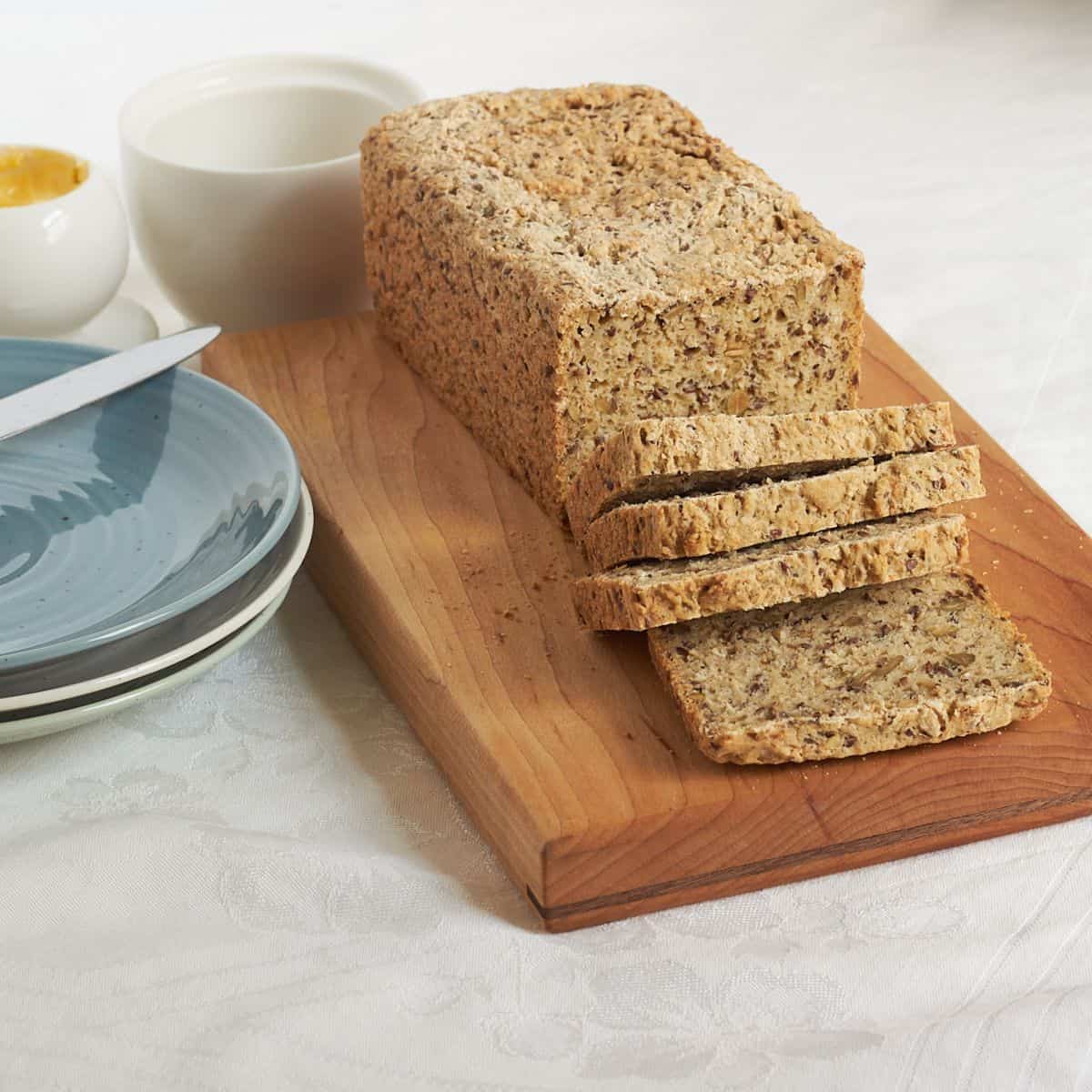
While you can make this by hand, it's very easy to work this seed bread with a stand mixer! Whisk the dry ingredients together, then add the wet ingredients and let the machine do the work. Gluten-free bread is easier to make than wheat bread because the batter is soft, and it only needs to rise (or proof) once.
Jump to:
Gluten-Free Breads
If you're looking for other gluten-free bread options, you might like:
- Gluten-Free Brioche
- Gluten-Free Artisan Bread
- Gluten-Free Sandwich Bread
- Gluten-Free French Baguette
- Gluten-Free Hamburger Buns
- Gluten-Free Irish Soda Bread (no yeast)
Ingredients for Gluten-Free Seed Bread
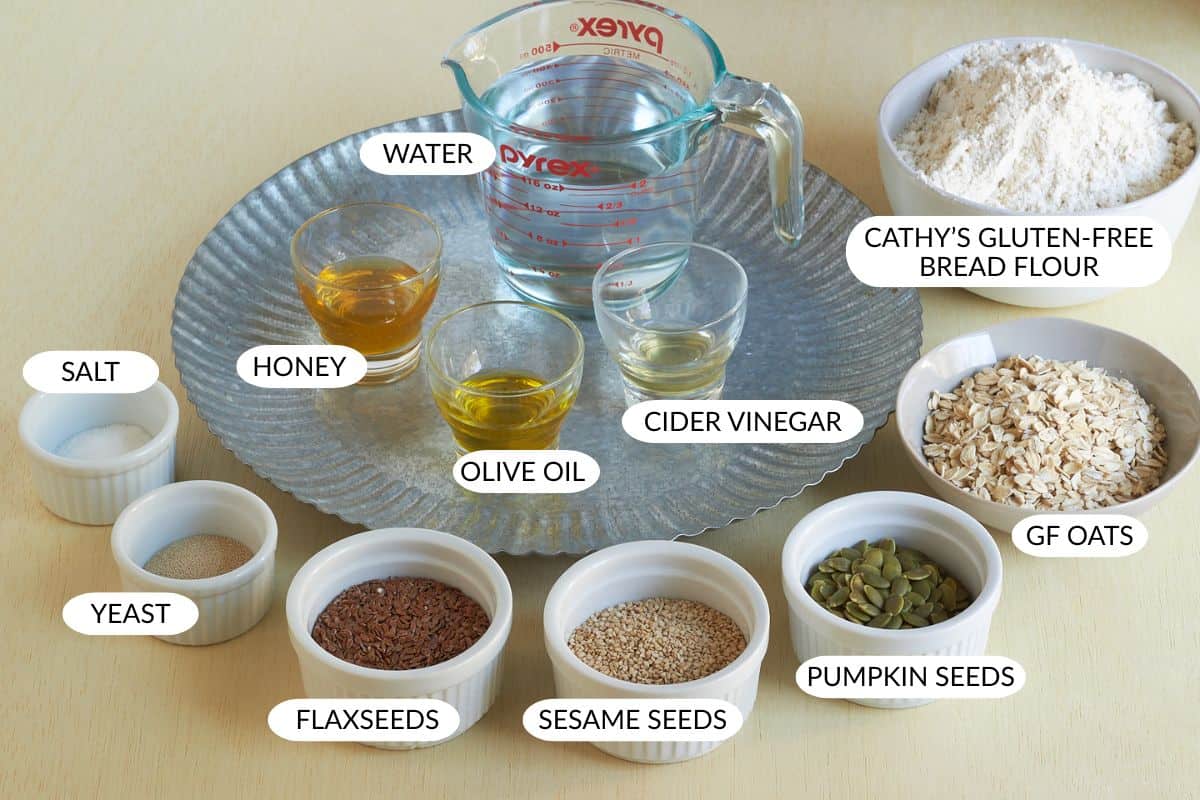
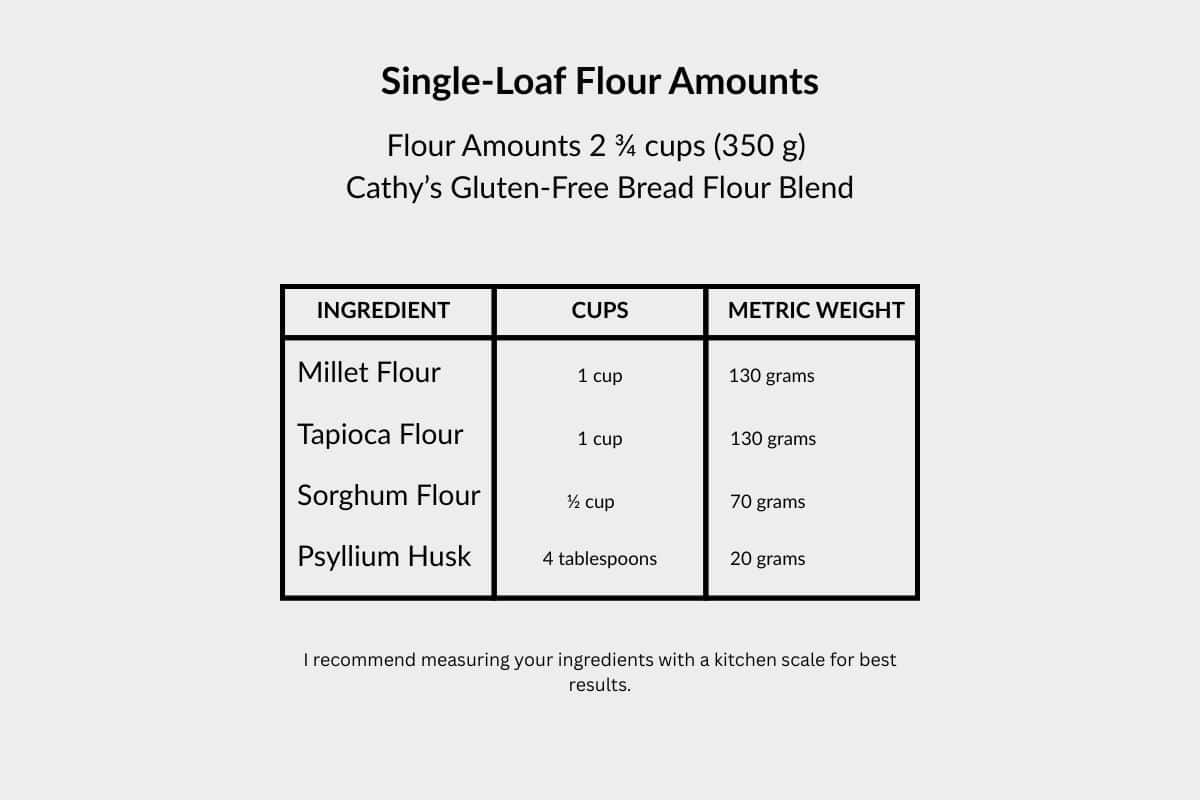
- Cathy's Gluten-Free Bread Flour Blend - This is the blend that I have used to test the recipe. It's very easy to make your own. If you want to try it before you make up a whole batch, I've included a chart below that gives you only the amounts you need for just this recipe.
- Gluten-Free Oats - If you need to avoid gluten, it's important to use certified gluten-free oats. Otherwise, oats are likely contaminated with gluten due to cross-contamination.
- Flaxseeds - If you use flax meal instead of the whole seeds, use ½ cup (50 g). I know it may seem counterintuitive, but I have tested it.
- Sesame Seeds - One-third cup (45 g) of sunflower seeds could be substituted for sesame seeds.
See recipe card for quantities.
How to Make Gluten-Free Seed Bread
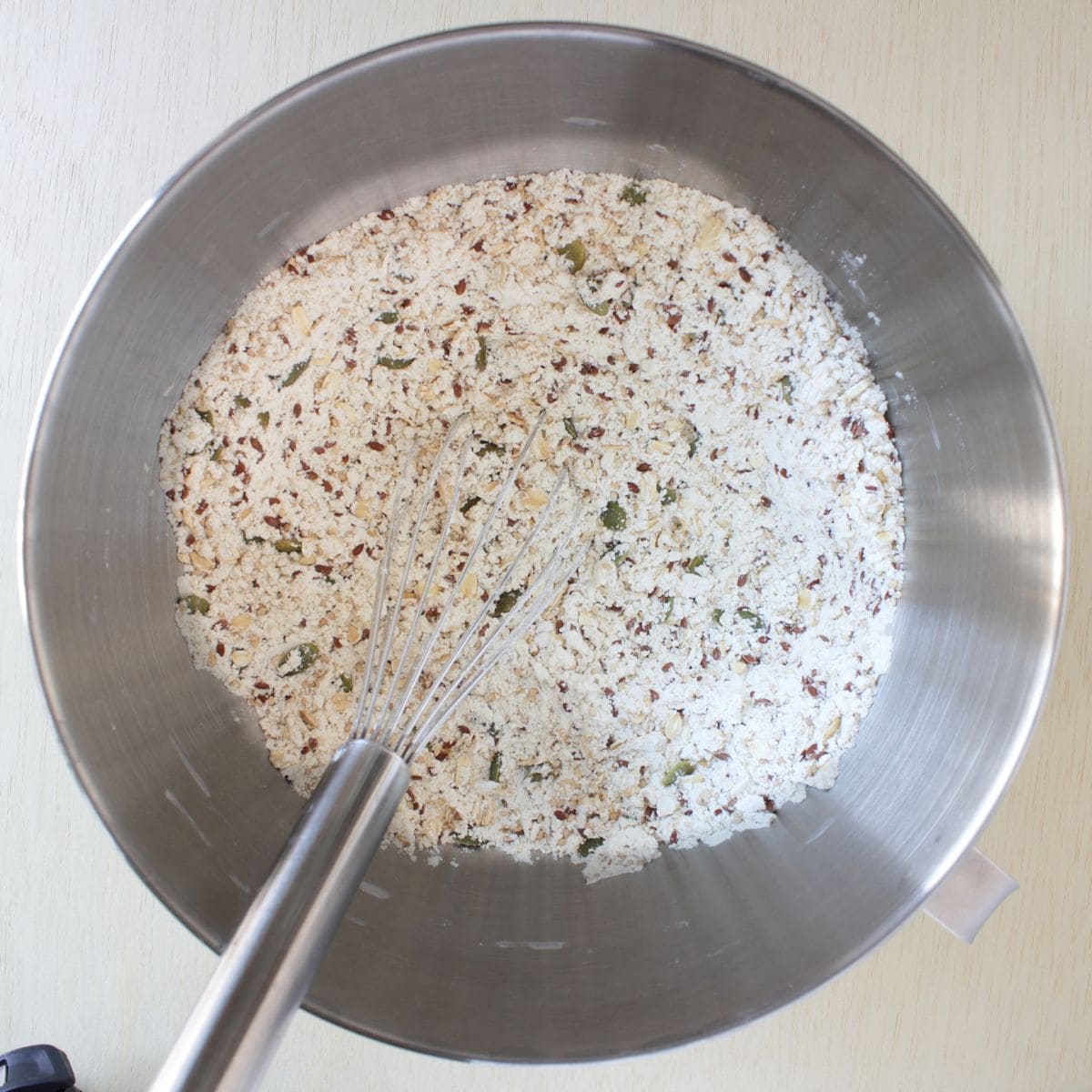
Whisk the dry ingredients together.

Combine the wet ingredients.
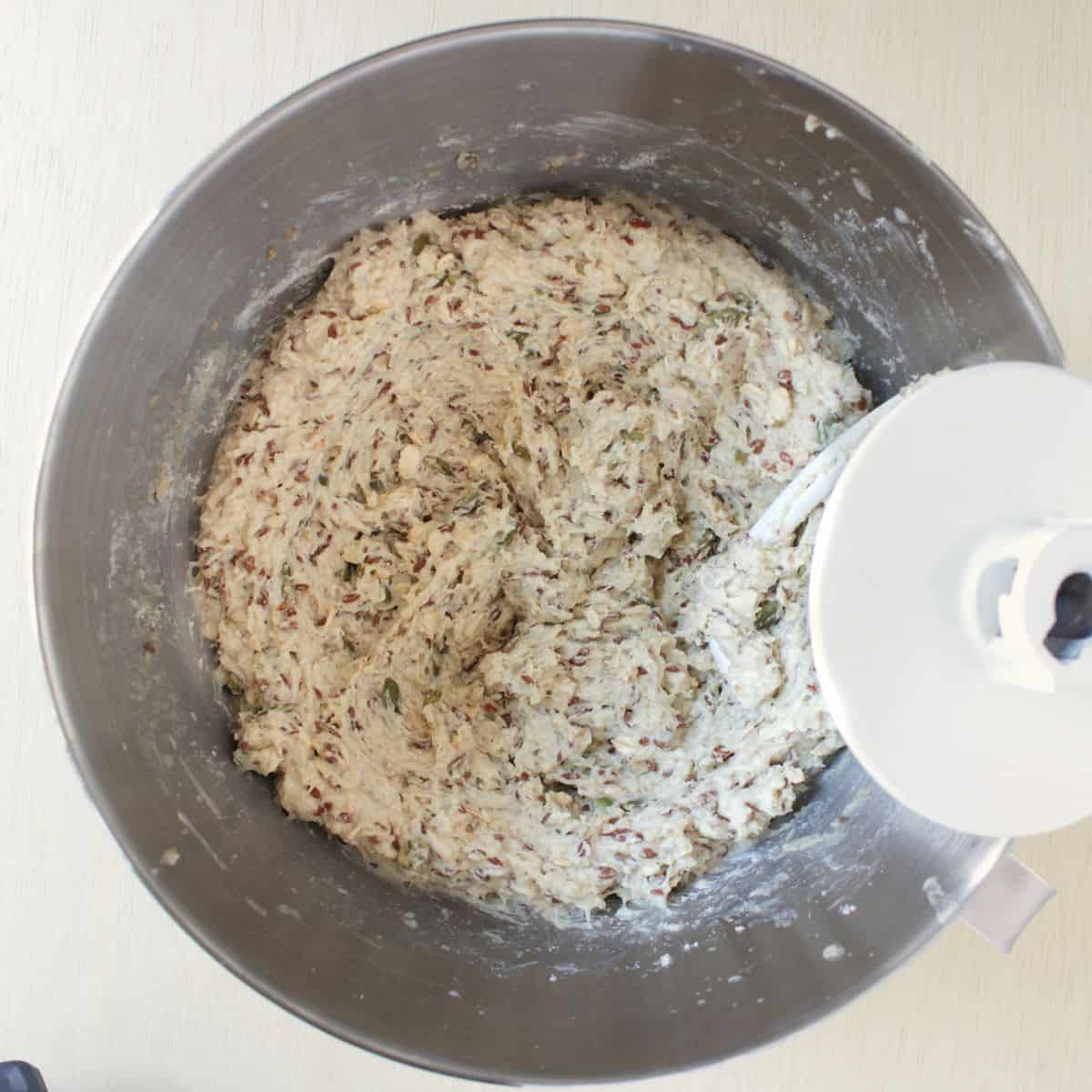
Mix them together.
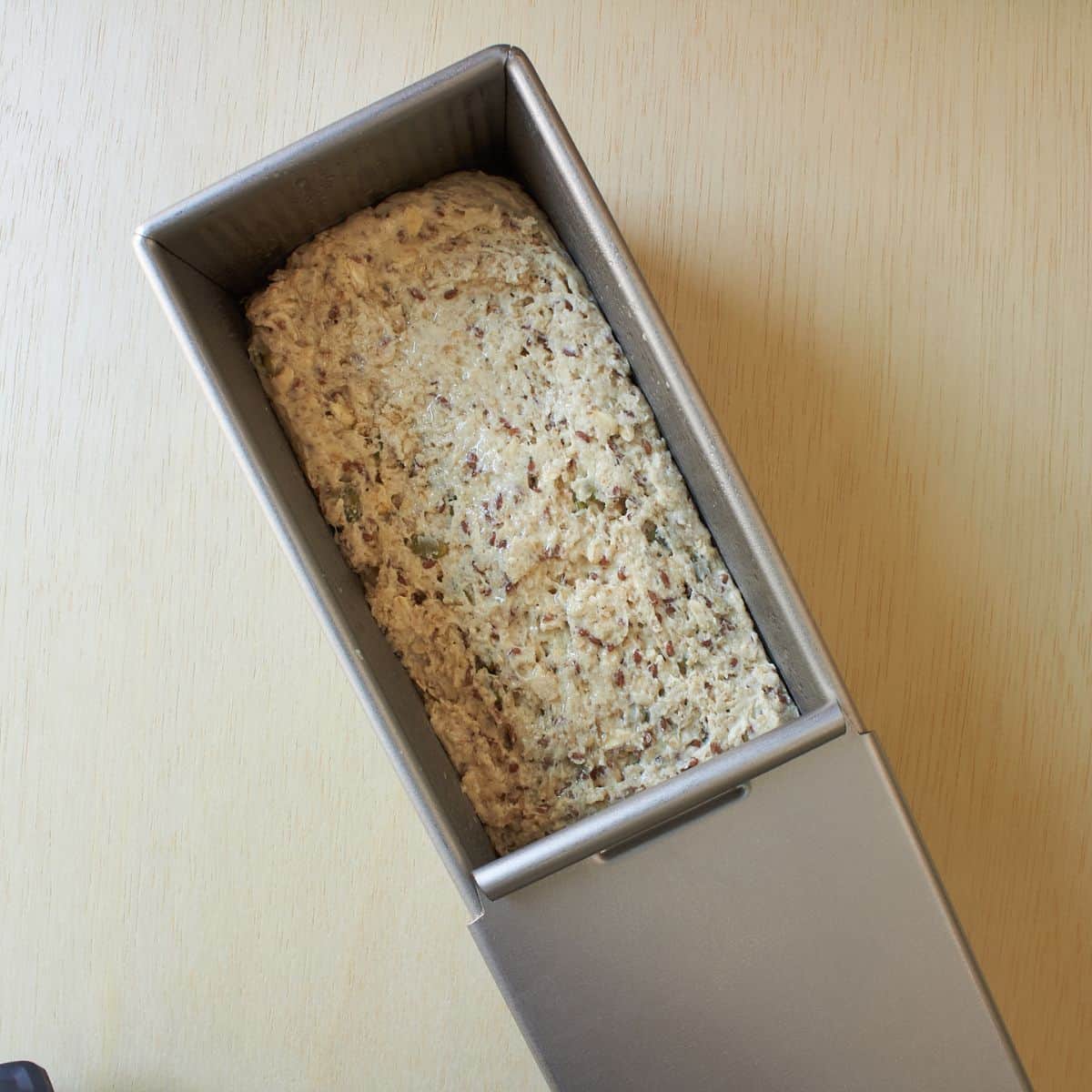
Transfer batter to a prepared pan.
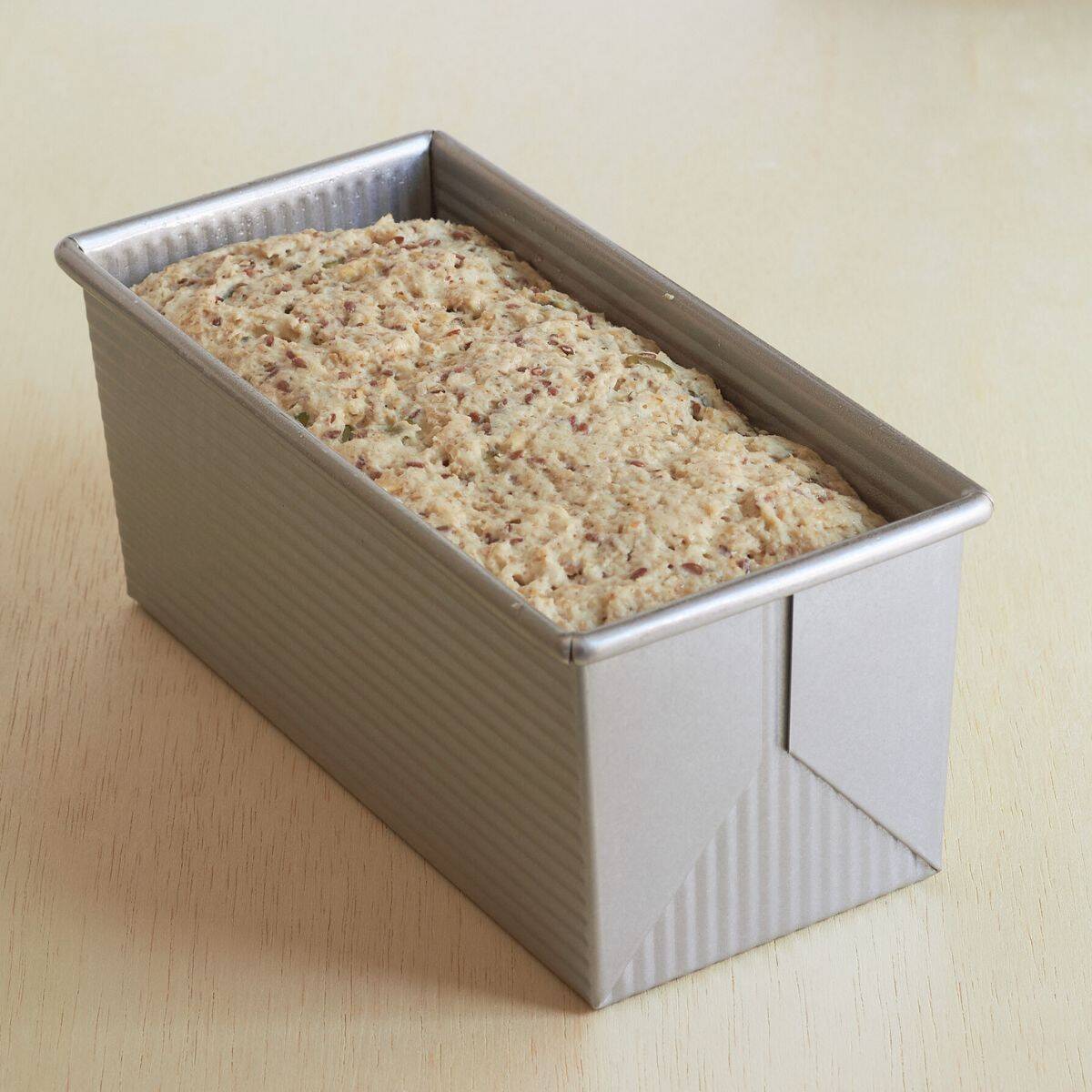
Let the dough rise in a warm place.
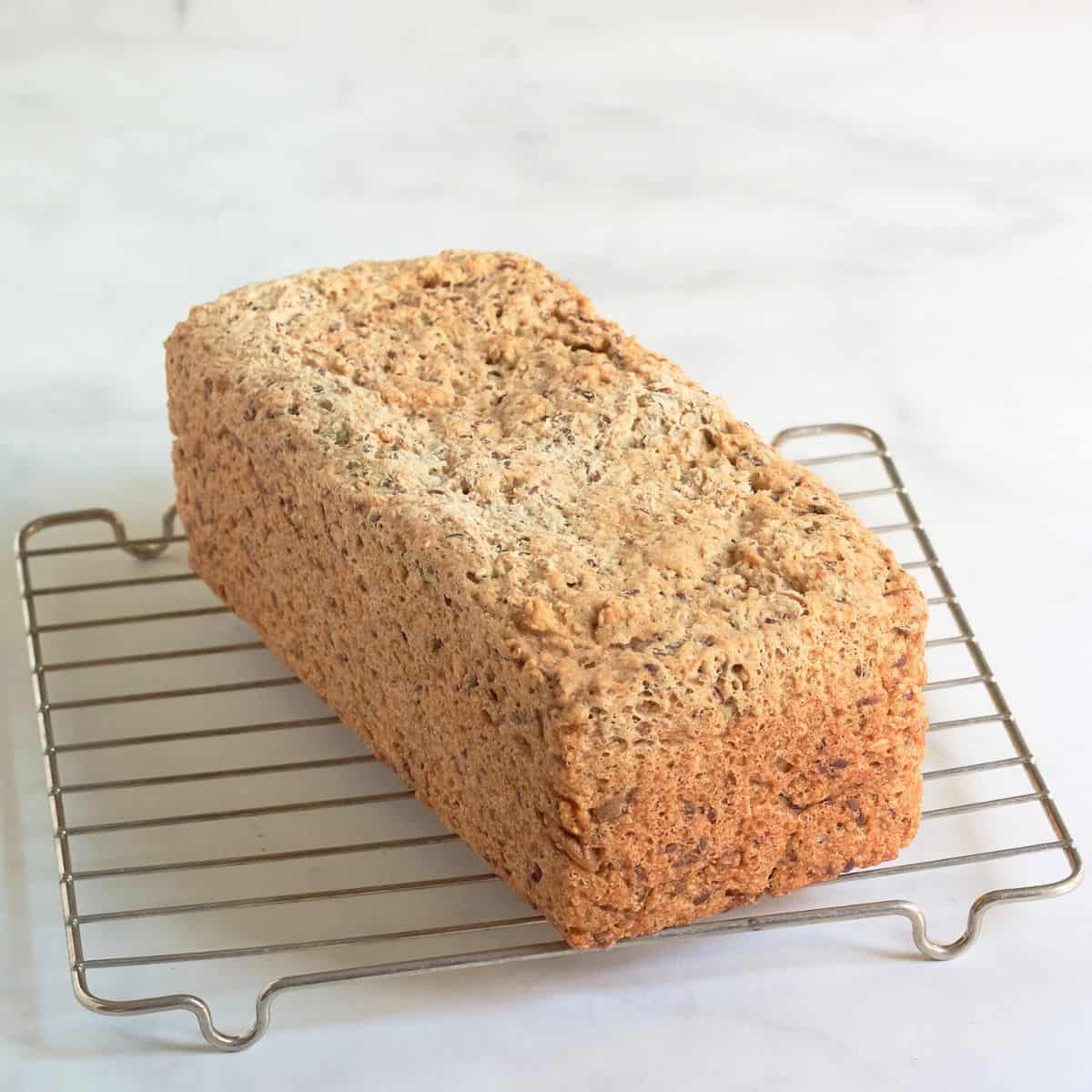
Bake and cool the loaf.
Hint: As with all gluten-free bread, allow the loaf to cool completely before you slice it.
Top Tips for Yeast Bread Baking
Here are some tips to help you with successful gluten-free yeast bread baking.
- The temperature of the water should be 105°F (41°C) to 115°F (46°C) when it comes into contact with the yeast.
- Don't allow the liquid to be too hot, or it will destroy the yeast.
- An ideal environment for proofing bread dough is 75°F (24°C)to 85°F (30°C). Bread rises much better in a warm, humid environment.
- Don't allow the dough to get a chill or cold draft during the rising process. Protect it from cold air, such as from an outside door opening in winter or air conditioning vents in summer.
- Gluten-free bread doesn't need to be kneaded like wheat bread because there is no gluten to develop. It does need to be mixed until the batter is smooth and consistent, and the moisture is evenly absorbed. A stand mixer with a dough hook is ideal for this job.
- Weigh your ingredients for accuracy. Volume (cups) measurements can fluctuate wildly and lead to disappointing results.
Meal Prep
The only things you might do to make this recipe easier would be to have your gluten-free bread flour blend mixed up and your ingredients measured out.
What to Serve with Gluten-Free Seed Bread


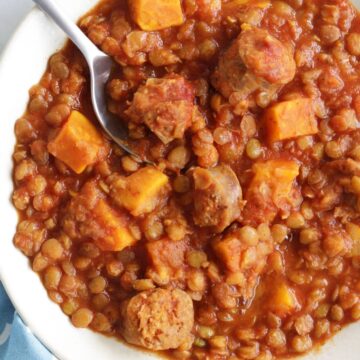

Storage
Once your loaf of gluten-free seed bread has cooled completely, store it in an airtight container at room temperature for up to two or three days, slicing it as needed. For longer storage, I would recommend refrigeration.
Better still, freeze extra slices of the loaf. Then, to freshen it up, toast individual slices.
Top tip
While a stand mixer is a great asset for making gluten-free bread (and many other things), you could work the batter by stirring it vigorously by hand.
Equipment
(As an Amazon Associate, I earn from qualifying purchases.)
Many people ask about using a bread machine to make gluten-free bread. I used a bread machine to make regular wheat bread for many years, back in my glutenous days.
However, since gluten-free batter has a higher moisture content than regular yeast breads and considering that it doesn't need a second rising, or proofing, I find my stand mixer to be much more helpful. You get a normal-looking loaf, and you can use the machine for so many other tasks, as well.
Recipe
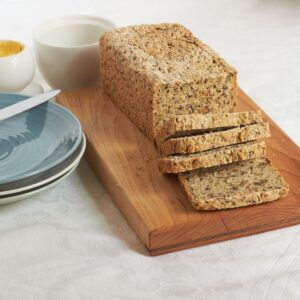
Gluten-Free Seeded Bread
Equipment
Ingredients
Dry Ingredients
- 2¾ cups Cathy's Gluten-Free Bread Flour Blend
- ¾ cup gluten-free oats
- ⅓ cup pumpkin seeds
- ⅓ cup sesame seeds
- ⅓ cup flaxseeds
- 2½ teaspoons instant yeast
- 2 teaspoons fine sea salt
Wet Ingredients
- 2 cups warm water (110℉/43℃)
- 2 tablespoons honey
- 1½ tablespoons olive oil
- 2 teaspoons apple cider vinegar
Instructions
- Grease a bread pan or line it with parchment paper.
- Whisk the dry ingredients in the bowl of a stand mixer.2¾ cups Cathy's Gluten-Free Bread Flour Blend¾ cup gluten-free oats⅓ cup pumpkin seeds⅓ cup sesame seeds⅓ cup flaxseeds2 teaspoons fine sea salt
- Add the wet ingredients.2 cups warm water2 tablespoons honey1½ tablespoons olive oil2 teaspoons apple cider vinegar
- With a dough hook on the stand mixer, run it on low speed for one minute to combine these ingredients. Scrape down the sides with a spatula. Then, mix on second-to-low speed for 5 minutes.
- Transfer the dough to a prepared bread pan. Brush the loaf with a little oil for better browning. Cover it loosely and allow it to rise in a warm place for about an hour, or until risen by 50%.
- Meanwhile, preheat the oven to 350℉ (177℃).
- Bake the bread for about 70 minutes, until the internal temperature is 210℉ (99℃).
Video
Notes
- Your dough should be very moist, more like a cake batter than a typical bread dough.
- Optionally, brushing some oil over the top before baking will help your loaf to brown up nicely.
Cathy Brak says
We love this hearty bread!