

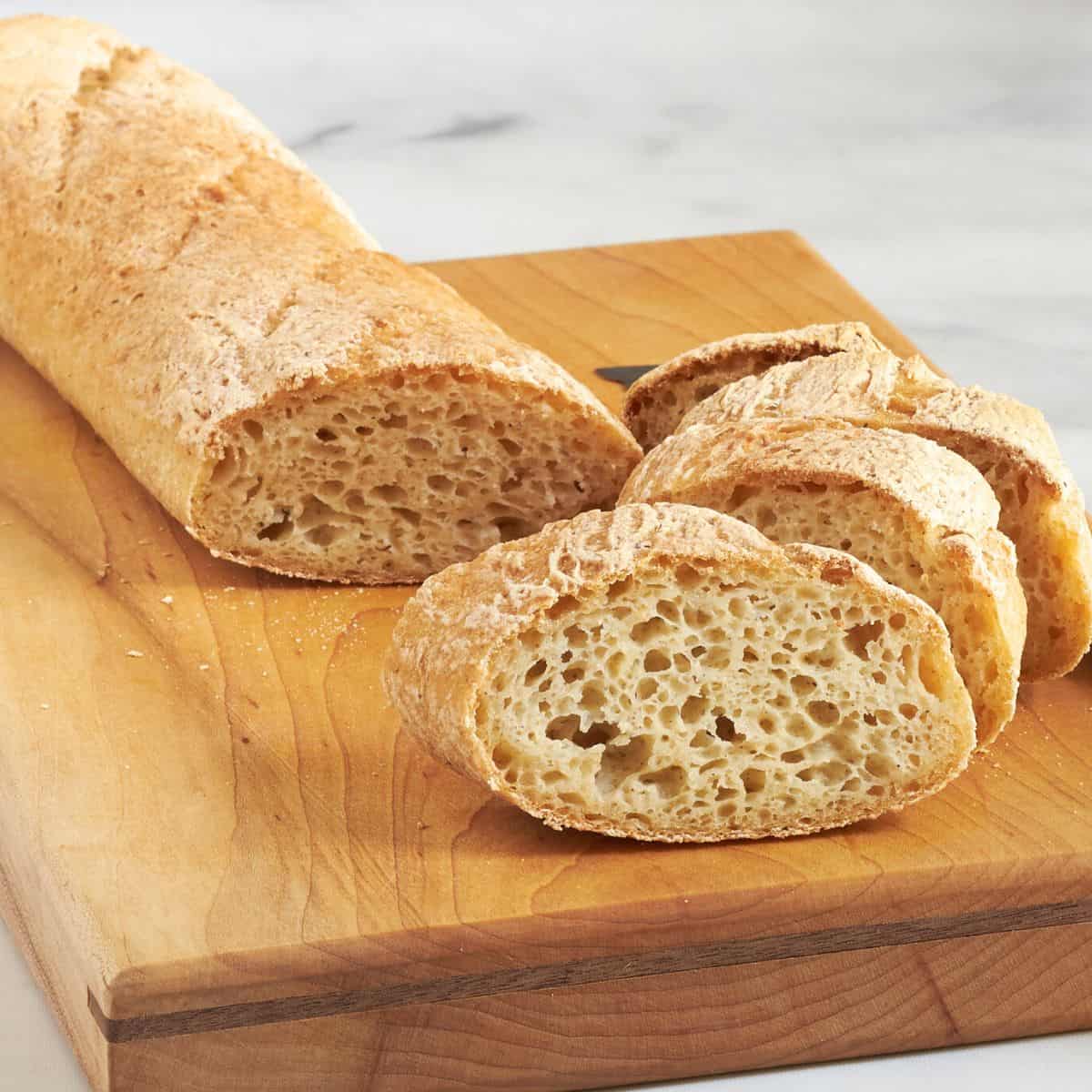
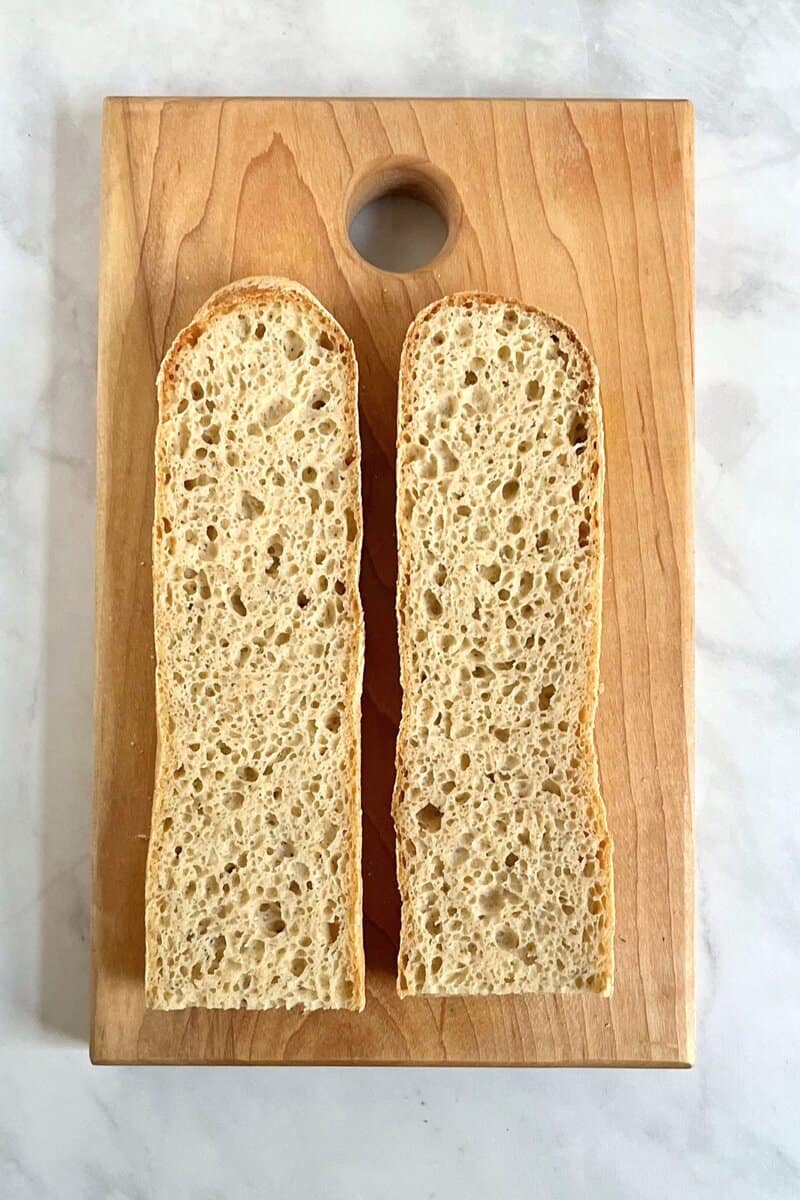
This gluten-free baguette recipe yields two French-style loaves, each with a soft, airy crumb, a tender, slightly squishy interior, and a thin, crisp crust. Use it for sandwiches or dipping. Slice it thinly and toast it for a charcuterie board. Or leave slices thick and soft! Let it grace your holiday table, and serve it with soups, stews, cheeses, and spreads.
Jump to:
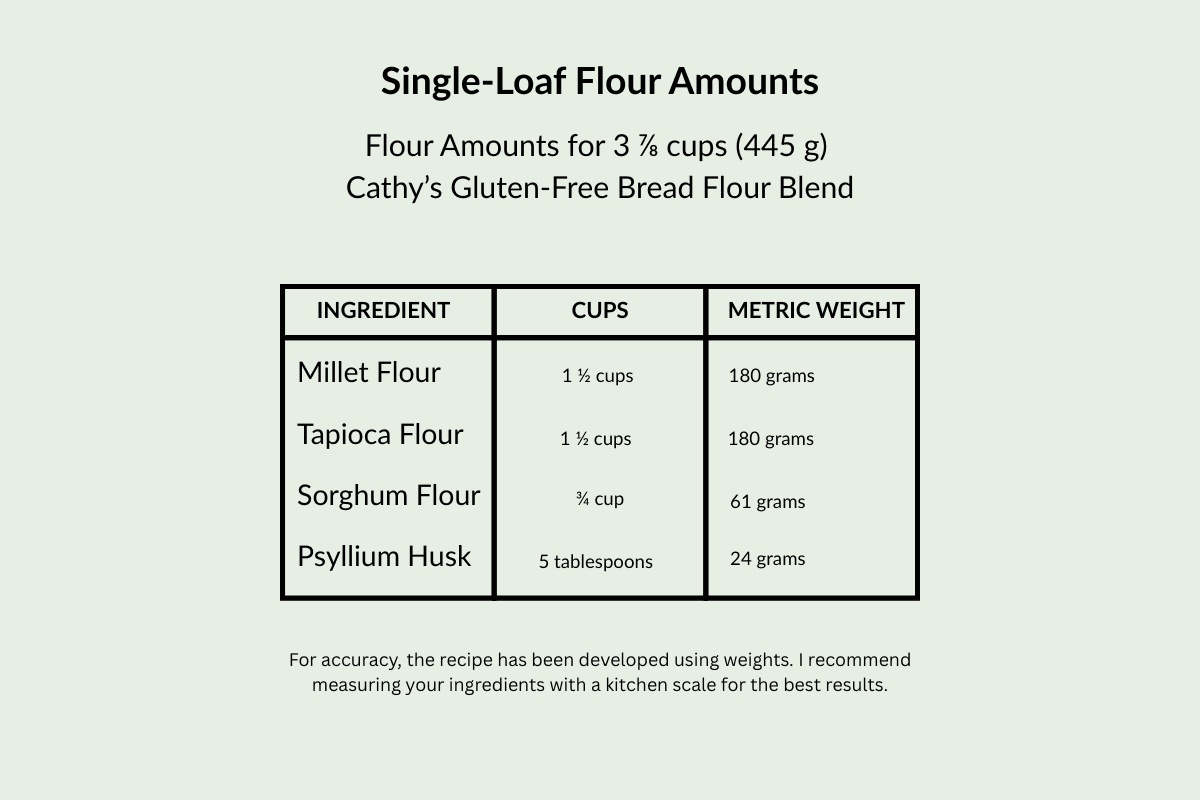
This gluten-free French bread is made with my gluten-free bread flour mix to save time and effort. You can also use the same flour blend to make sandwich bread, hamburger buns, or an artisan loaf.
Gluten-Free French Bread Ingredients (and Substitutions)
Assemble your ingredients.
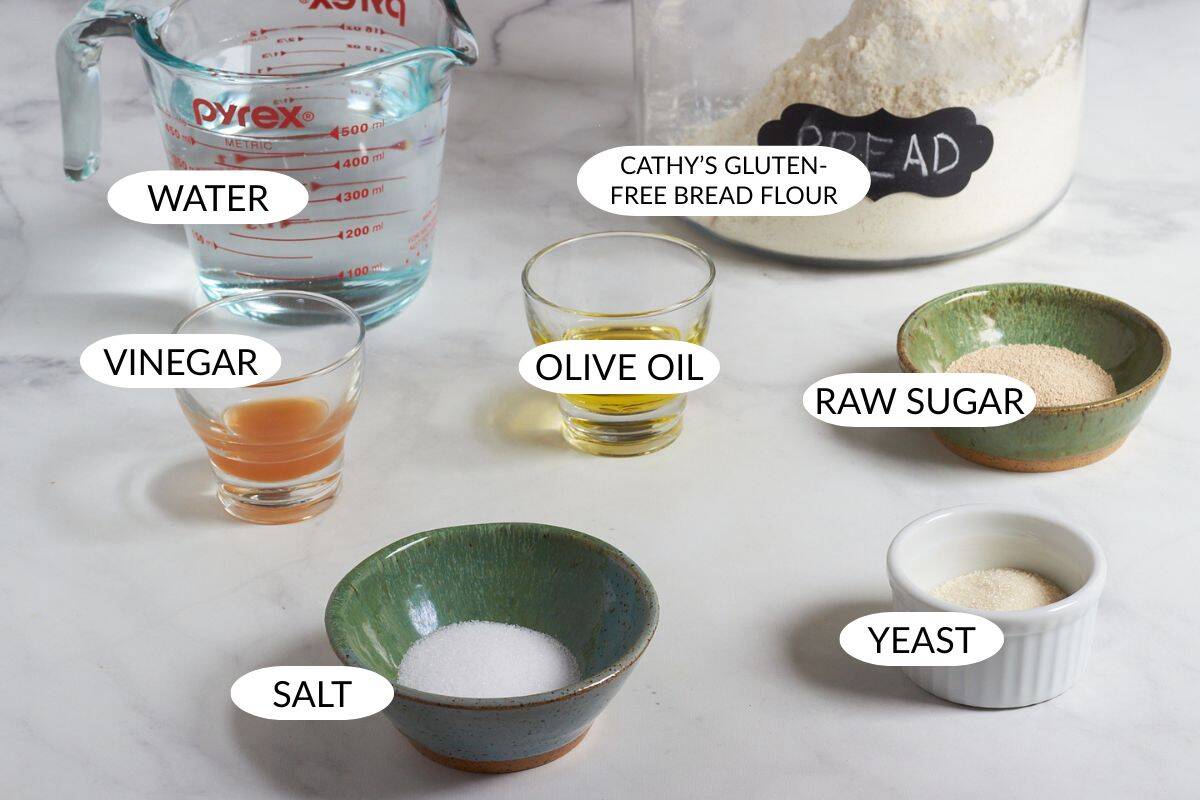
- Cathy's Gluten-Free Bread Flour Blend
- Instant Yeast - If you only have active dry yeast, you'll need to sprinkle it on a mixture of the warm water and sugar and give it 5 minutes to "bloom."
- Water - Pay attention to the temperature of the water. You should be able to pour it over the inside of your wrist and feel just a slight warmth.
See recipe card for quantities.
Step-by-Step Gluten-Free Baguette Instructions
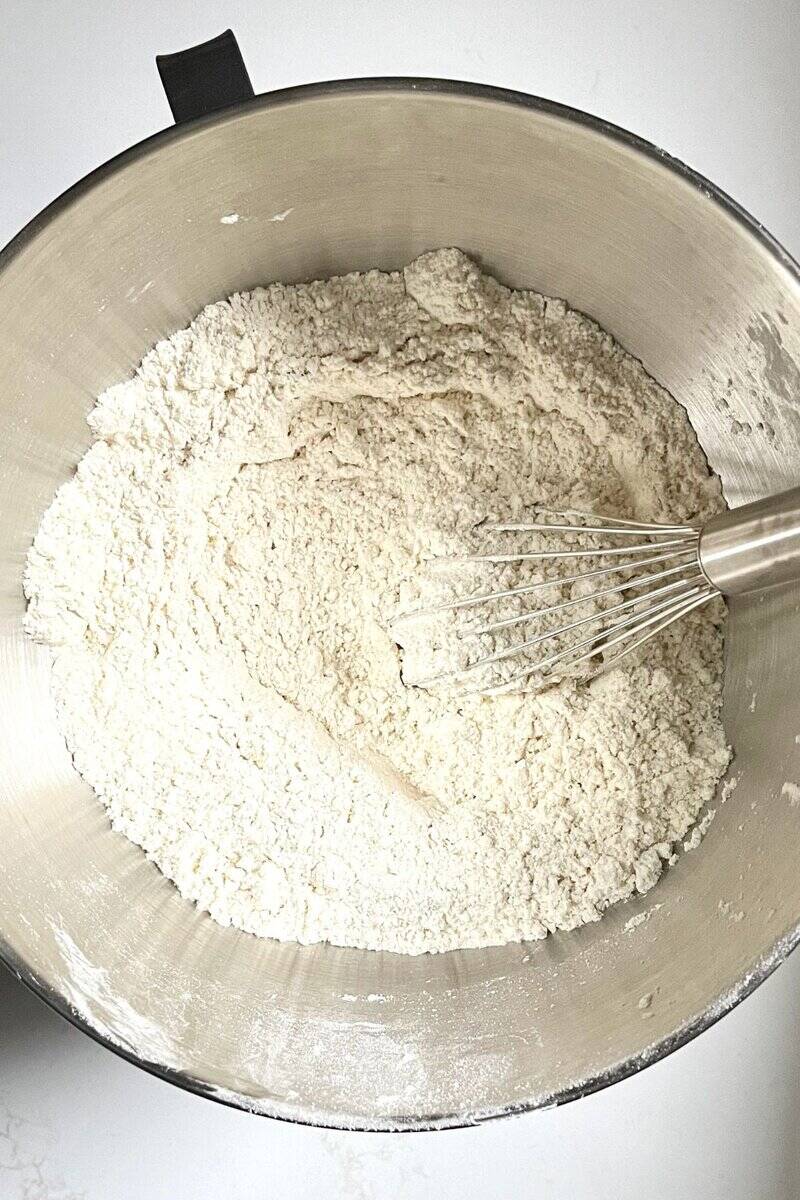
Whisk the dry ingredients together in a large mixing bowl.
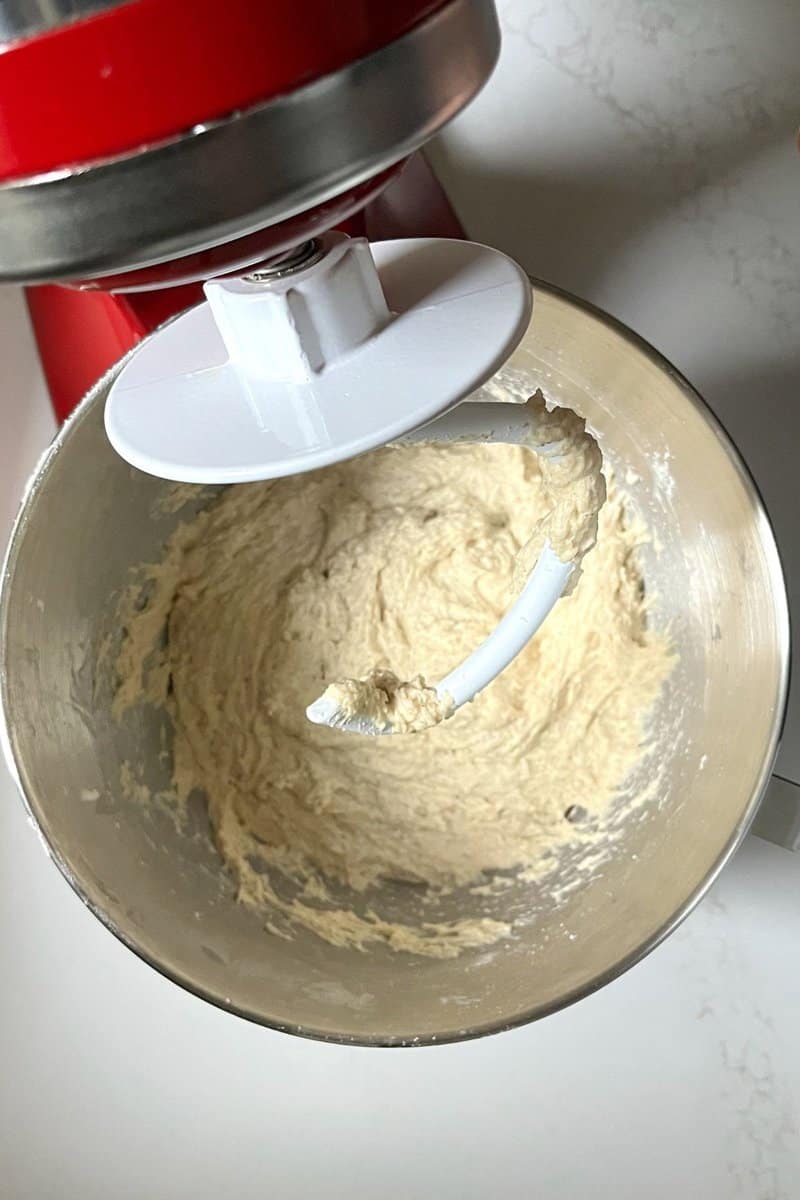
Add warm liquid and mix well. The dough should be moist and sticky.
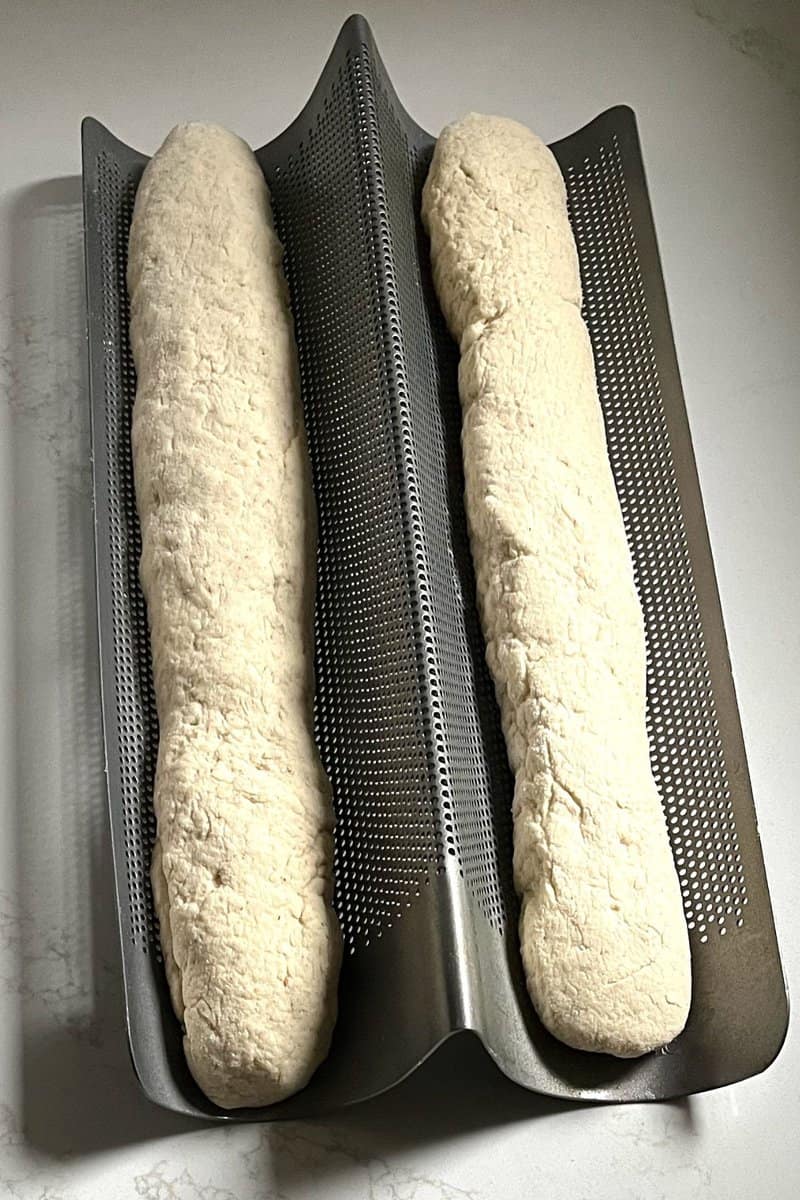
Shape into loaves and proof in a warm environment.
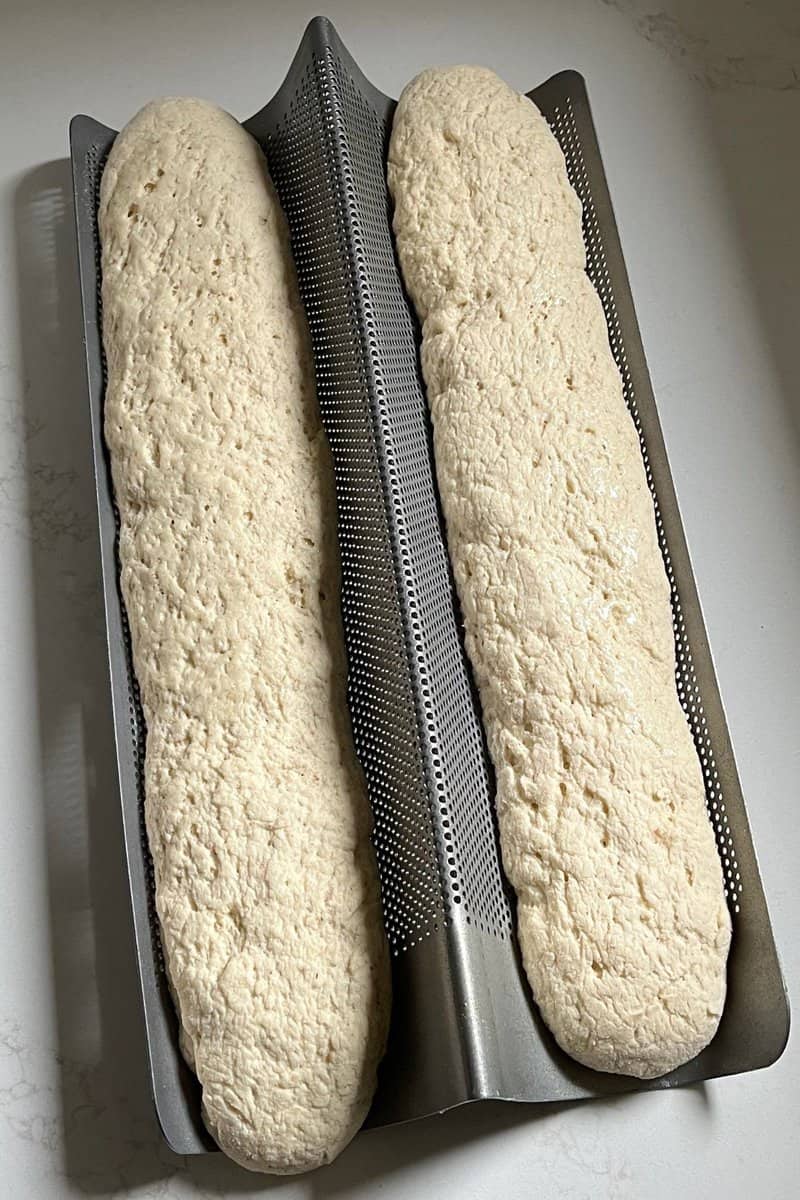
They should increase in size by about 50%.
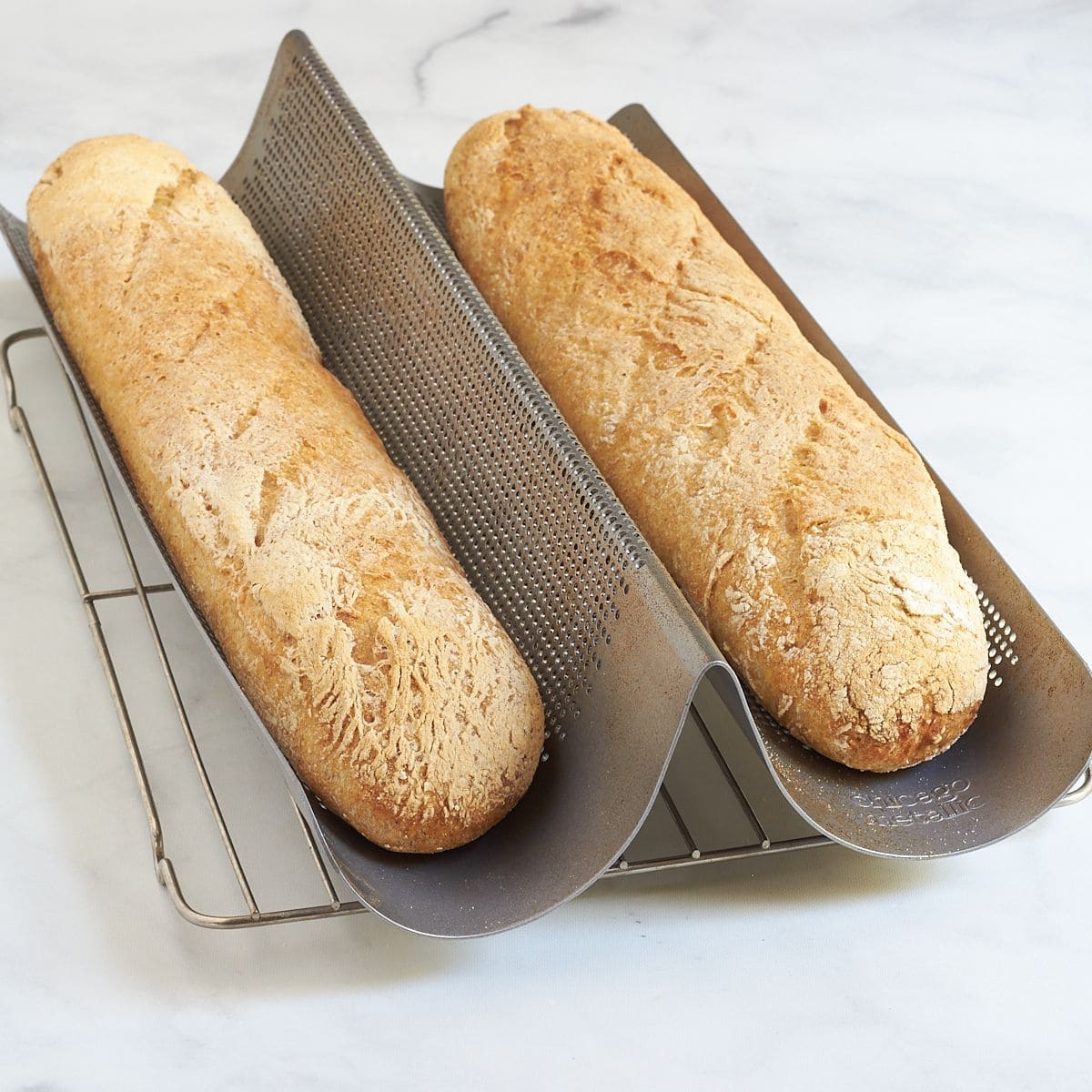
Bake in a hot, steamy oven for 10 minutes. Reduce the heat and finish.
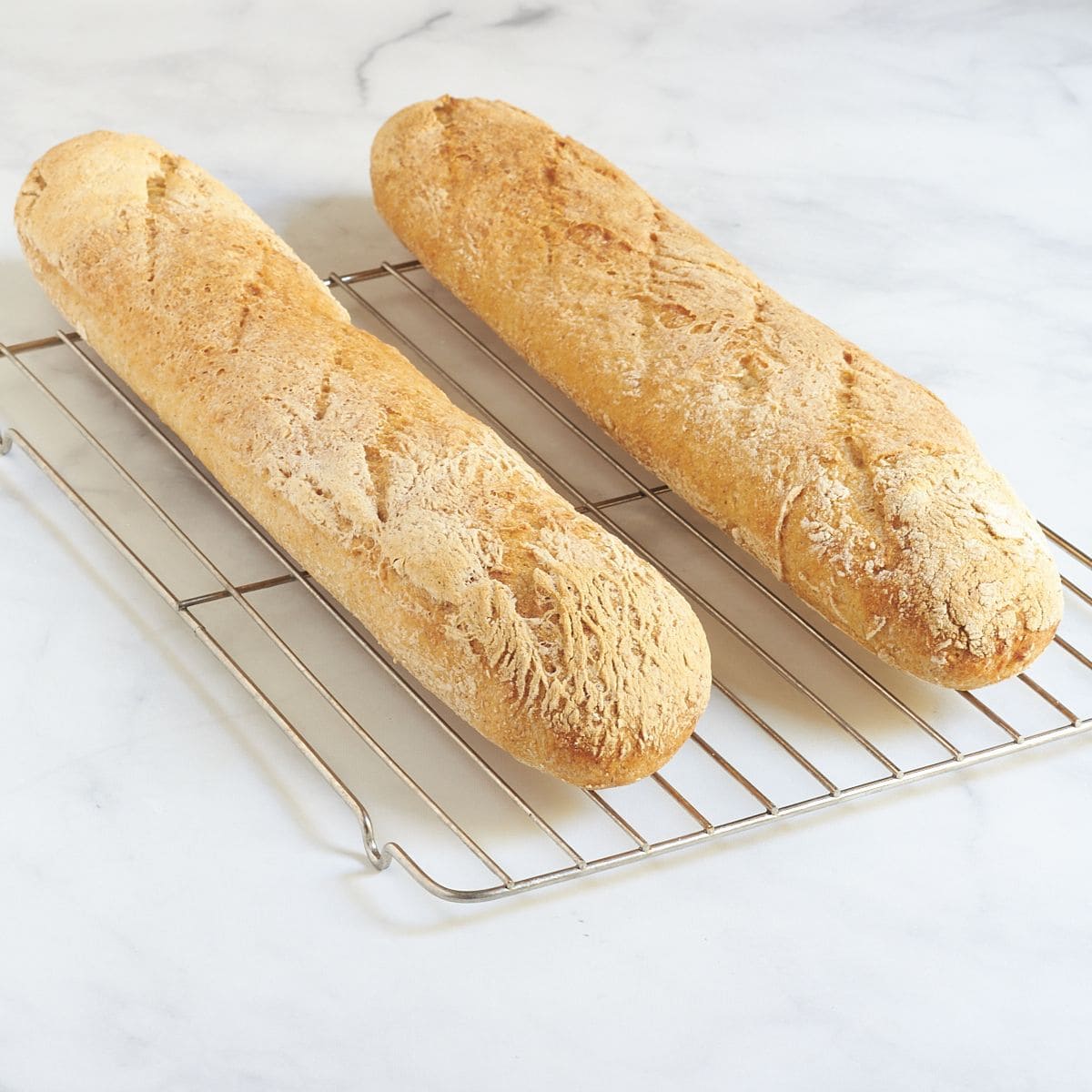
Cool baguettes completely on a wire rack before slicing.
Top Tips for Yeast Bread Baking
Here are some tips to help you with successful gluten-free yeast bread baking.
- The temperature of the water should be 105°F (41°C) to 115°F (46°C) when it comes into contact with the yeast.
- Don't allow the liquid to be too hot, or it will destroy the yeast.
- An ideal environment for proofing bread dough is 75°F (24°C)to 85°F (30°C). Bread rises much better in a warm, humid environment.
- Don't allow the dough to get a chill or cold draft during the rising process. Protect it from cold air, such as from an outside door opening in winter or air conditioning vents in summer.
- Gluten-free bread doesn't need to be kneaded like wheat bread because there is no gluten to develop. It does need to be mixed until the batter is smooth and consistent, and the moisture is evenly absorbed. A stand mixer with a dough hook is ideal for this job.
- Weigh your ingredients for accuracy. Volume (cups) measurements can fluctuate wildly and lead to disappointing results.
Variations
You could also make three smaller loaves with this recipe. Your baking time may then be slightly less.
Meal Prep
In preparation for this gluten-free crusty bread recipe, it helps to have the bread flour blend mixed up ahead of time. It has only four ingredients and is great to have on hand for all sorts of gluten-free bread baking.
Equipment
You could make this gluten-free French bread recipe with a regular baking sheet, but I really like this French bread pan for it.
Storage
Store leftover, cooled gluten-free French bread, unsliced and sealed in an airtight container, at room temperature for a day or two.
Beyond that, slice it and freeze it in a ziplock bag.
FAQ's
There are two reasons why your gluten-free French bread may be gummy.
1. Slicing gluten-free bread before it has cooled completely will produce a gummy texture.
2. Using a flour blend with too much starch may also create a gummy loaf.
The secret to a crusty baguette is steam. Some ovens allow you to add water directly and use a steam setting. Otherwise, place a metal pan on a lower rack in your oven as it is preheating. Just before placing your bread in to bake it, toss a few ice cubes into the hot pan to create steam. Remove the pan after 10 minutes.
(As an Amazon Associate, I earn from qualifying purchases.)
Recipe
Gluten-Free French Baguette
Equipment
- 1 Stand Mixer optional but very helpful
- 1 French bread pan optional but nice
Ingredients
- 3⅞ cups Cathy's Gluten-Free Bread Flour Blend
- 2 tablespoons raw sugar
- 2 teaspoons fine sea salt
- 2 teaspoons instant yeast
- 2 cups warm water 110℉-115℉ (43℃-46℃)
- 1½ tablespoons olive oil
- 2 teaspoons apple cider vinegar
Instructions
- Whisk the dry ingredients together in the bowl of your stand mixer or a large mixing bowl.3⅞ cups Cathy's Gluten-Free Bread Flour Blend2 tablespoons raw sugar2 teaspoons fine sea salt2 teaspoons instant yeast
- Add the wet ingredients.2 cups warm water1½ tablespoons olive oil2 teaspoons apple cider vinegar
- Run the mixer with a dough hook on low speed until everything is combined. Then, run it on low-medium speed for about 6 minutes. Alternatively, work the dough by hand vigorously until it is smooth but sticky.
- Meanwhile, oil your pans.
- On a lightly floured surface (Any gluten-free flour will do.), divide the dough into two even parts. Roughly pat each into a rectangular shape. Starting with a long side, press and roll it into a log shape almost as long as your pan.
- Carefully place each loaf onto your prepared pan. Cover loosely with oiled plastic wrap and let them sit in a warm room for an hour to an hour and a half, until increased by about 50% in size.
- Meanwhile, position a rack in the center of your oven where your loaves will bake. If your oven has a steam bake setting, add water to it before preheating. Otherwise, set a metal pan on a lower rack in the oven. Preheat the oven to 480℉ (250℃).
- If you placed a metal pan in the bottom of your oven while it was preheating, toss a handful of ice cubes into it now. Being careful of the steam, place your loaves onto the middle rack and bake for 10 minutes.
- Turn the heat down to 425℉ (220℃). Remove the ice cube pan. (The water in a steam oven will have all evaporated by now.) Continue to bake the bread for 20 minutes more without steam.
- Remove the browned loaves and set them on a wire rack to cool. Gluten-free bread should be cooled completely before slicing, or it will be gummy.
Video
Notes
- Use fresh yeast. It will keep in the freezer if you don't use it often.
- The warm water should not exceed 115°F (46°C) when it comes into contact with the yeast.
- An ideal environment for proofing (rising) bread dough is a humid 80°F (27°C). Warmer than that is great for it; in a cooler room, it will simply take longer.
Sarah S says
So good and simple! Thank you!!
Cathy Brak says
Thanks, Sarah! I'm so glad you enjoyed it!
Cathy Brak says
We're loving this bread! Even those who don't need to eat gluten-free love it!