

This is the best gluten-free bread flour blend for my yeast bread recipes. If you're looking for a gluten-free bread flour without rice, oat, corn, or soy, you're in the right place! As this easy DIY blend is particularly well-suited for baking yeast breads, use my all-purpose flour blend for cakes, cookies, muffins, and other non-yeast baking.

Jump to:
I have been working for years to develop a flour recipe that performs well in all of my yeast bread recipes, and this is the best gluten-free flour for bread that I have found. The flour combination is similar to what Katarina at the Loopy Whisk uses, but I have taken it a couple of steps further to simplify the baking process.
I have tested my flour blend in several different yeast bread recipes and will share those with you as they become available. So far, they are:
- Gluten-Free Sandwich Bread
- Gluten-Free Artisan Bread
- Soft Gluten-Free Hamburger Buns
- Gluten-Free Cinnamon Rolls
- Gluten-Free French Baguette
- Gluten-Free Pizza Dough
- Gluten-Free Brioche Bread
- Gluten-Free Irish Soda Bread (no yeast)
Ingredients and Substitutions
These are the ingredients that I use in my yeast bread flour blend, but I do recommend possible substitutions below.
If you choose to replace one of the flours in this recipe, substitute by weight rather than volume. An inexpensive kitchen scale will give you better results than measuring by cups.
(As an Amazon Associate, I earn from qualifying purchases.)
I have included cup (volume) measurements for those who prefer them, but I encourage you to click on the little Metric toggle button just below the list of ingredients for weights in grams.

- Millet Flour - An equal weight of brown rice flour could be used instead.
- Tapioca Flour - You can replace this with an equal weight of another starch, such as arrowroot starch, potato starch (NOT potato flour), or cornstarch.
- Sorghum Flour - Buckwheat flour or oat flour are suitable replacements for sorghum flour, but substitute by weight, not volume.
- Whole Psyllium Husks - You may substitute psyllium powder, but use only 47 g of it. That will be about 6 tablespoons. Powder absorbs more water than the whole husk does, due to more surface area. I recommend Now brand psyllium husks, as some others tend to give your bread a pinkish or purplish hue. Katrina of the Loopy Whisk recommends blond psyllium husk in the UK.
See recipe card for quantities.
Labor- and Time-Saving Tip
This recipe makes about two loaves. Once you're comfortable with it, you can double or triple the batch to save time. Mixing up a larger batch is easier than measuring out each flour every time.
For best results, multiply the recipe by weight instead of volume. Professional bakers always measure by weight, and I developed this recipe that way. Using a kitchen scale will give you more accurate measurements-and better bread.
(As an Amazon Associate, I earn from qualifying purchases.)
If you would like to make a larger batch, simply click on the number of Servings in the recipe below. A slider bar will appear, and you can adjust it to your liking.
Instructions
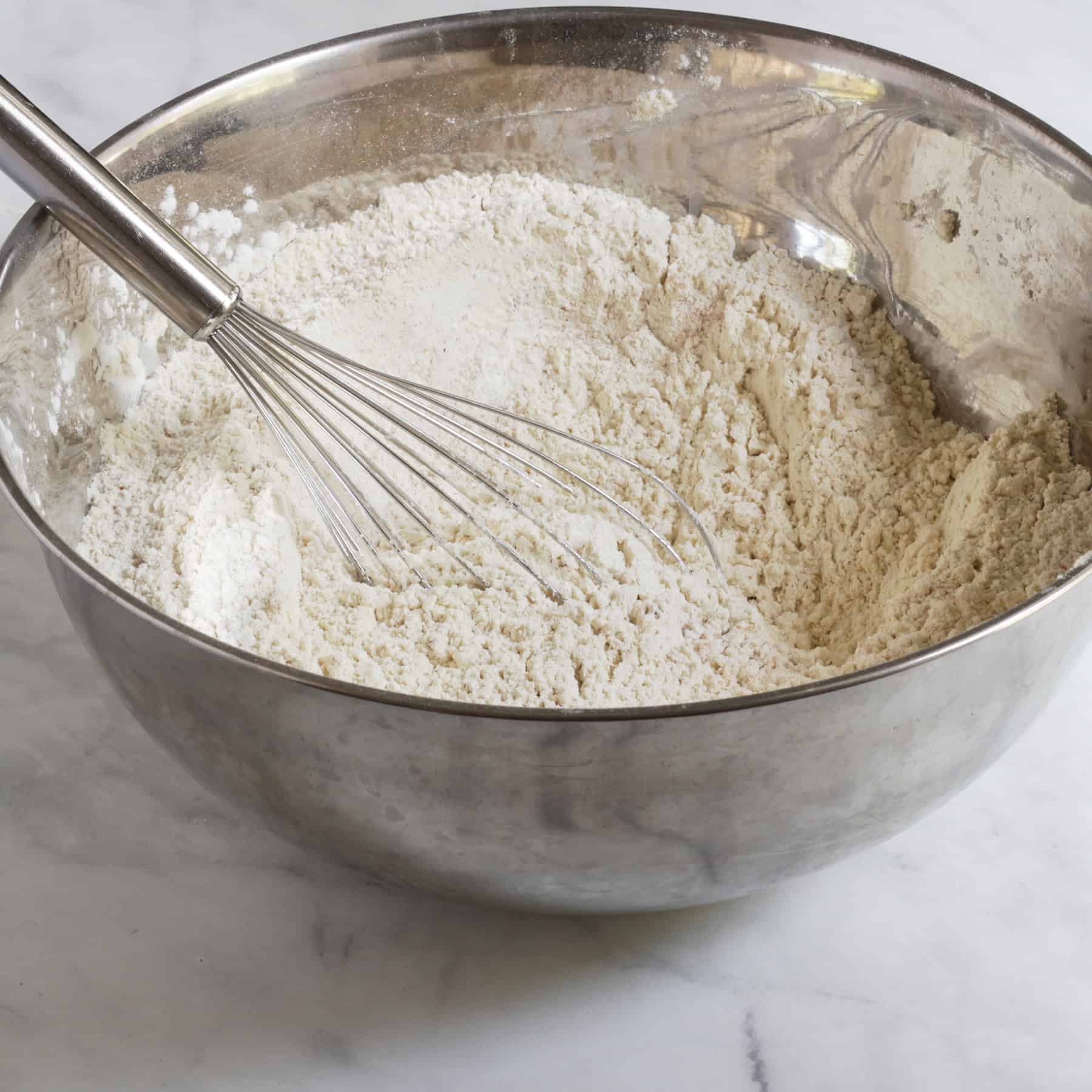
Simply whisk all of the ingredients together in a large mixing bowl.
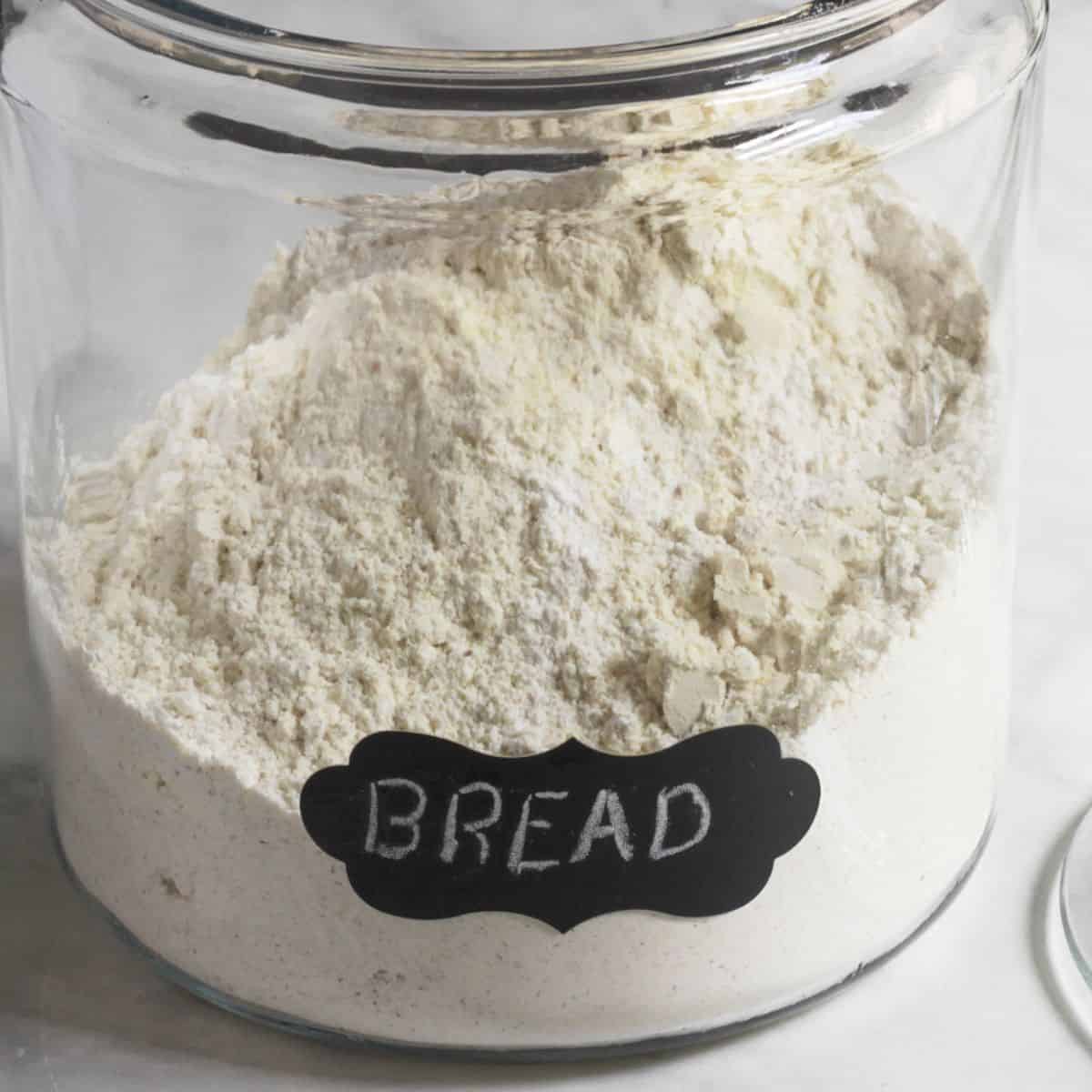
Store any unused flour blend in a covered container.
Storage
Store your flour in a covered, or sealed, container at room temperature if you'll be using it regularly. For longer-term storage, keep gluten-free flour, sealed, in the refrigerater or freezer. Just measure out what you'll need and bring it up to room temperature before you use it.
Top tip
The best tip that I can give you here - and I know I keep saying it! - is to measure by weight rather than volume.
FAQ's
Yes, binders are essential in almost all gluten-free baking to do the job that gluten does in wheat flour. They hold the dough together, giving it structure. This not only makes the finished product less crumbly but also allows it to hold together for a better rise.
Psyllium husk is an excellent binder for yeast breads, while xanthan gum works better for other baking.
(As an Amazon Associate, I earn from qualifying purchases.)
Recipe
Rice-free Gluten-free Bread Flour Blend
Equipment
- 1 Whisk
Ingredients
- 3 cups Millet Flour
- 3 cups Tapioca Starch
- 1 cup Sorghum Flour
- 11 tablespoons Psyllium Husk
Instructions
- Weigh out the ingredients into a large mixing bowl.
- Whisk the mixture together until everything seems to be evenly combined.
- Store any unused flour blend in an airtight container.
Video
Notes
- I strongly recommend weighing your ingredients on metric kitchen scales. This is not only more accurate, but also easier.
- Store flour in a sealed container at room temperature for a short time. For longer storage, keep it in the refrigerator or freezer.
Dorothy says
Question:
Would this work in a breadmaker?
Cathy Brak says
This flour would probably work in a bread maker that has a gluten-free setting. Otherwise, it will want to do a second rising, and that just doesn't work well for gluten-free bread. I have not tested the recipe with a bread maker, as I got rid of mine years ago after going gluten-free. I find the stand mixer to be a much more useful appliance than the bread machine. I'm making a recipe right now, to be published soon, that simply requires measuring your ingredients into the bowl of the stand mixer and running it for 5 minutes to do the work. The main difference is that you have to be there to bake it, but there will be no hole from a paddle in your loaf!
Cathy says
This flour blend makes my bread baking much easier!