

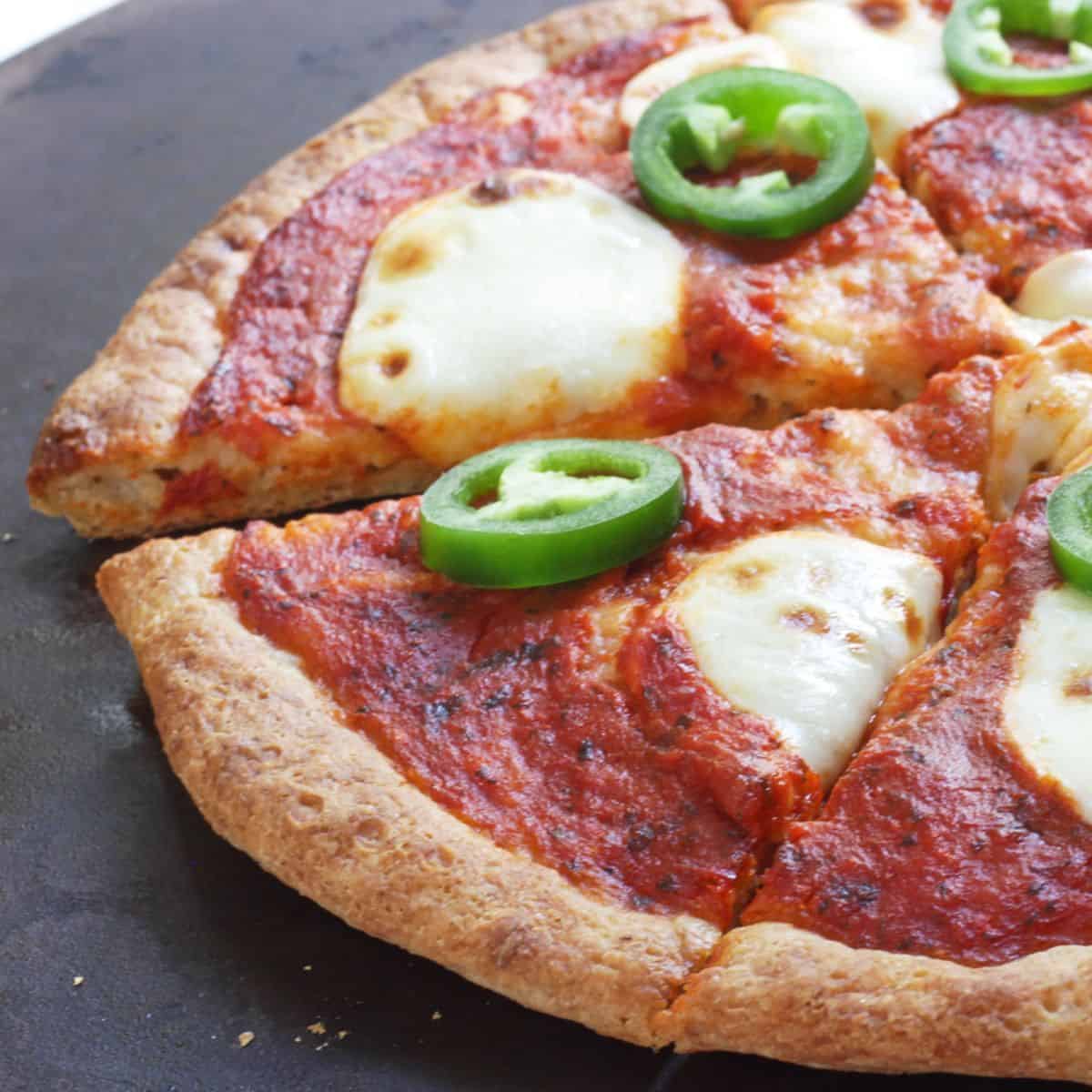
This gluten-free pizza crust recipe is the result of years of testing recipes from books and online, and it's become my go-to base for our Friday night family pizza tradition. The dough uses instant yeast, which is mixed right in with the dry ingredients for an easier, more straightforward process. The flour blend already contains psyllium husk, an ingredient I love in gluten-free yeast doughs because it helps the crust stay moist, flexible, and sturdy without crumbling.
After shaping, the dough rises just once for about 45 minutes. During this time, the flours and psyllium husk absorb moisture while the yeast does its work, giving you a better texture with less fuss. To keep things simple, the dough is shaped on parchment paper, making it easy to slide onto a hot stone or pan and bake at a high temperature like traditional pizza. A quick parbake cooks the crust through, so it won't get soggy under the topping. No flipping of the crust or extra steps are required.
Jump to:
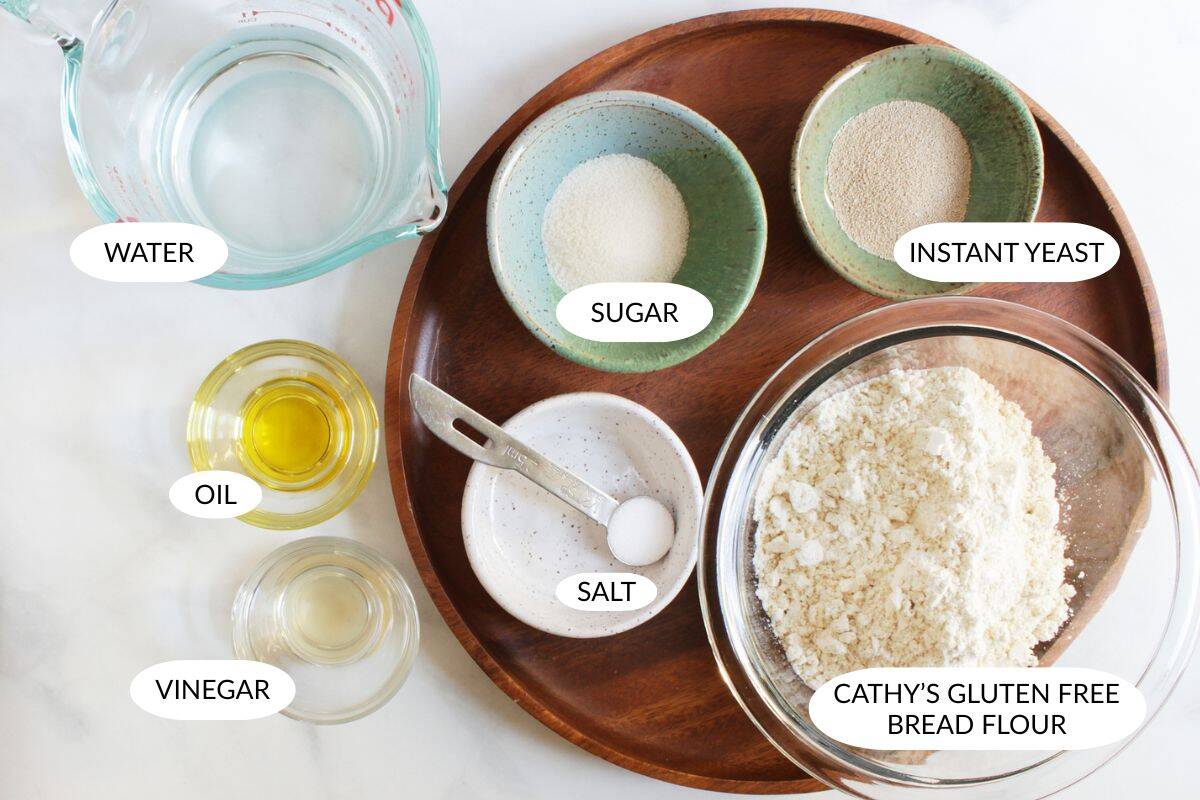
Ingredients
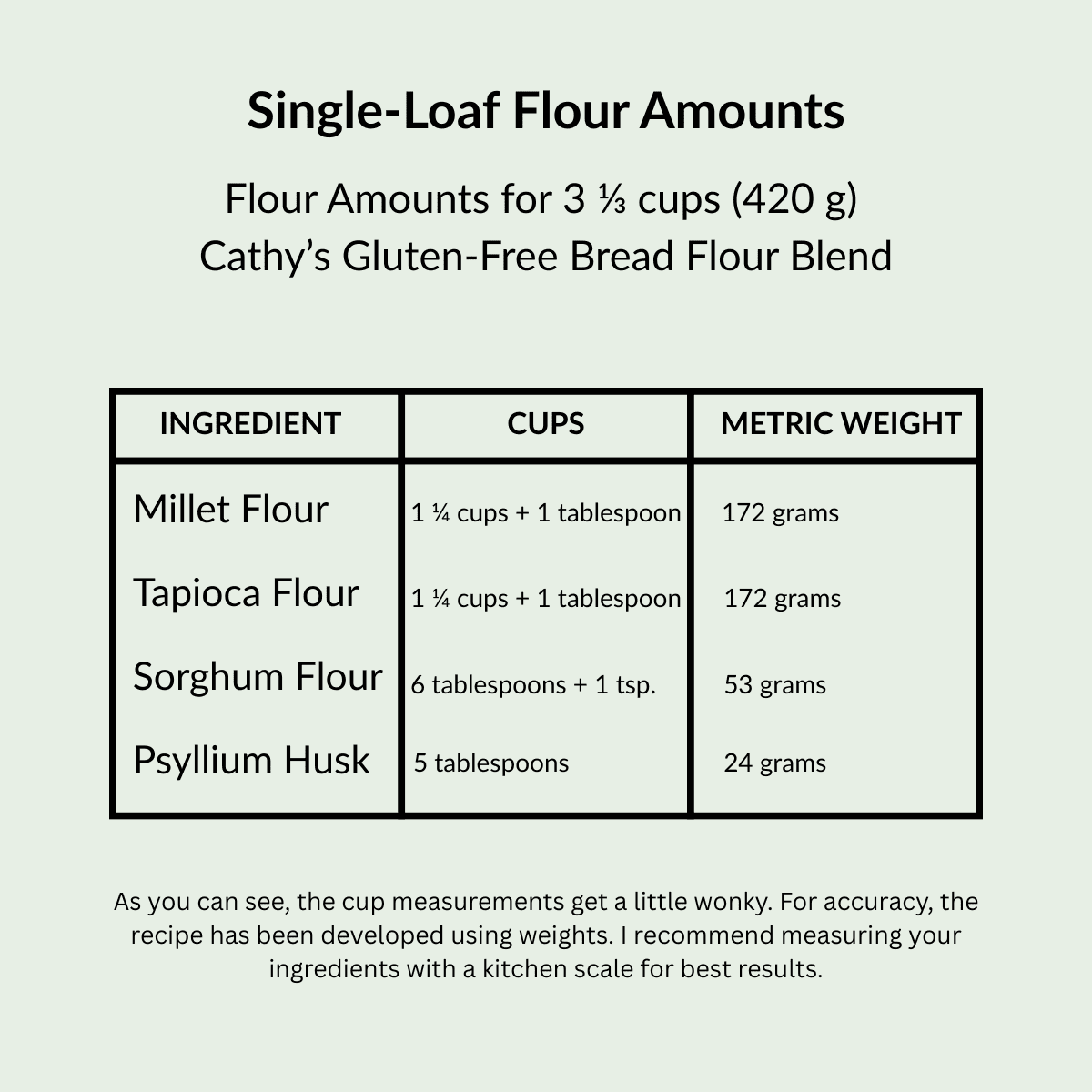
- Cathy's Gluten-Free Bread Flour Blend - By having this mixed up and on hand, all gluten-free bread baking is much easier! If you want to mix only enough for this recipe, here are the amounts:
- Sugar - I prefer raw sugar, but any cane sugar will work here.
- Vinegar - I use apple cider vinegar, but white vinegar would also work.
- Instant Yeast - Make sure that your yeast is fresh. If you use active, dry yeast, you'll need to let it bloom with the water and sugar before adding the liquid mixture to the dry.
- Water - The water should be 110-115℉ (43°C) when it comes into contact with the yeast.
See recipe card for quantities.
Instructions
You can make this gluten-free pizza dough either with a stand mixer or by hand.
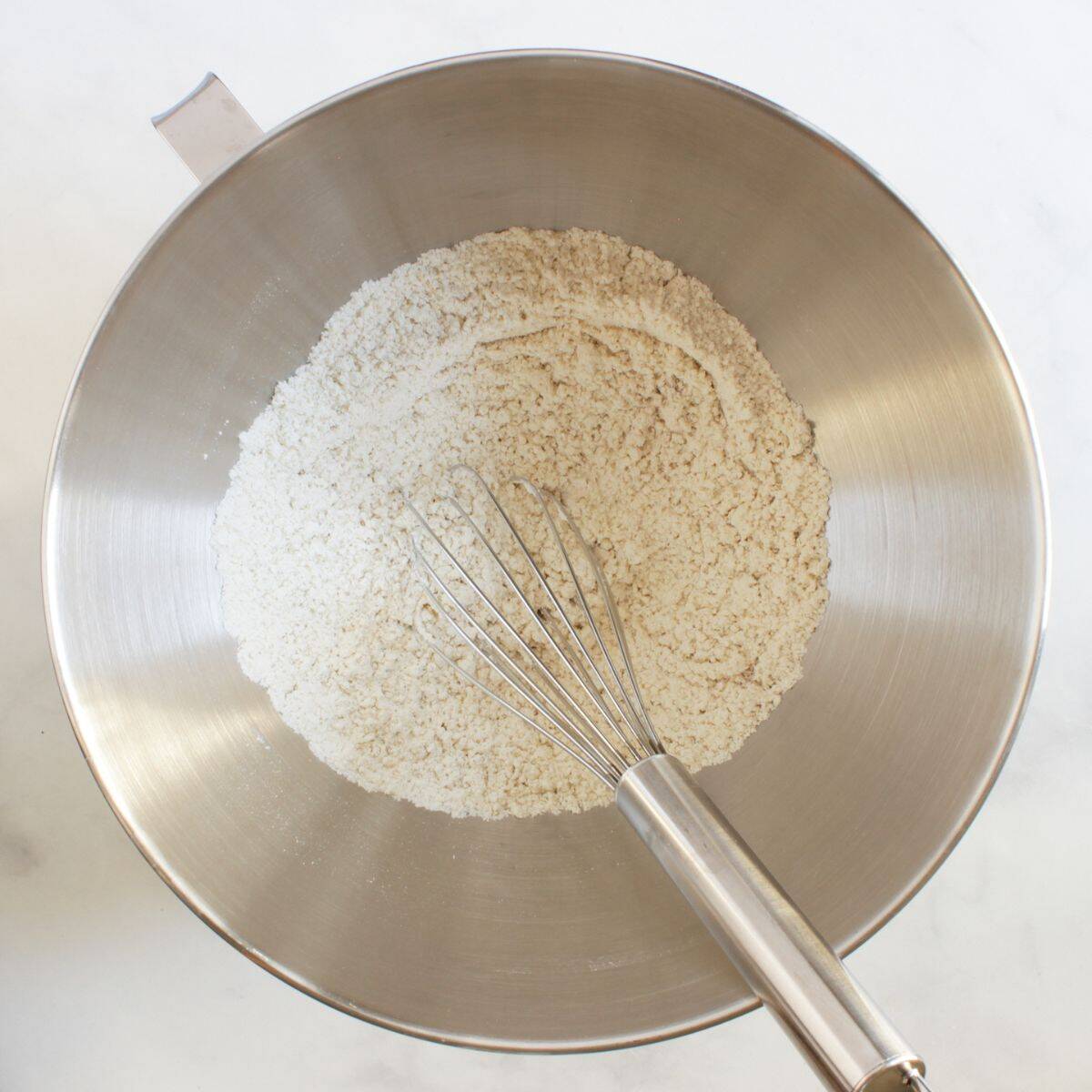
- Combine dry ingredients.
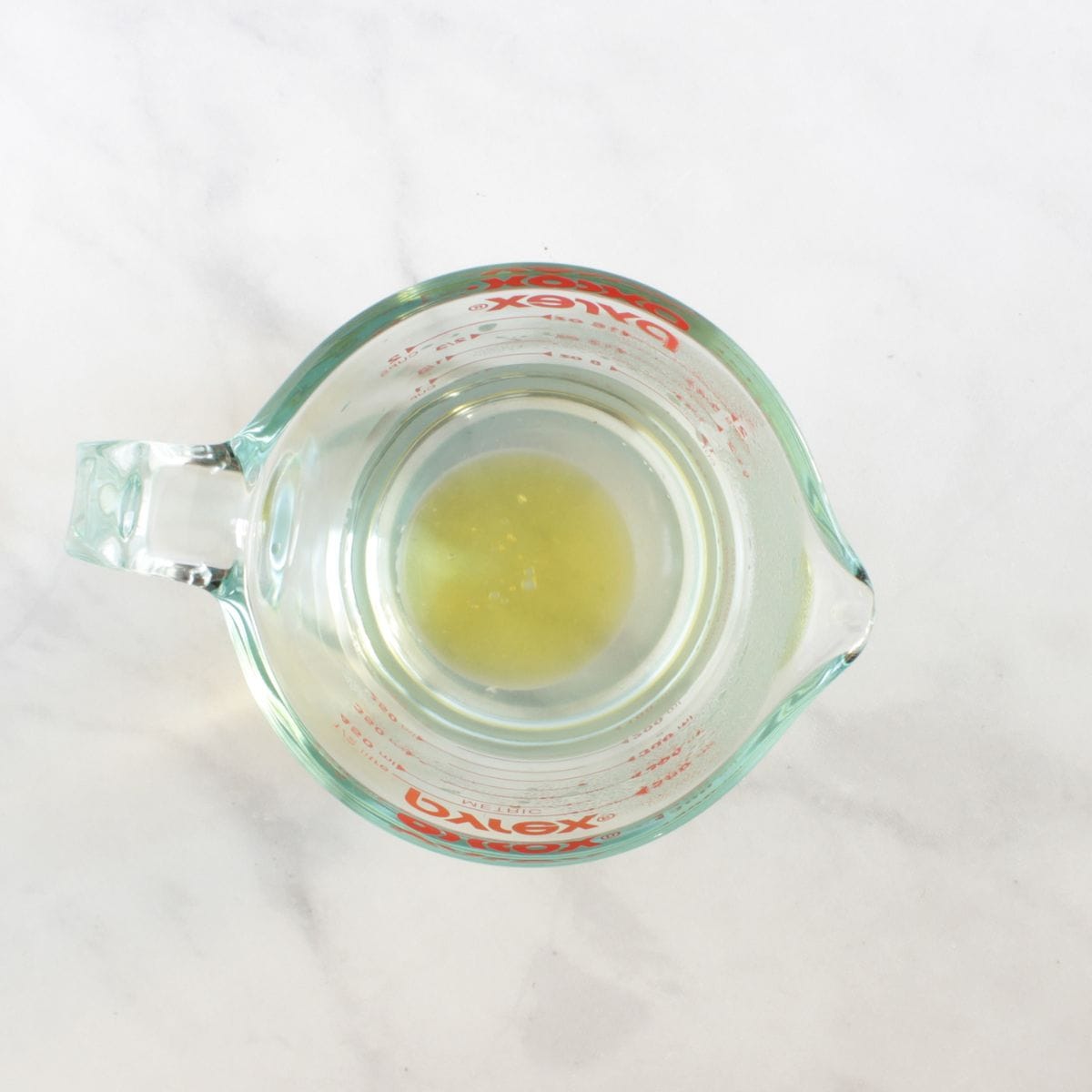
2. Combine wet ingredients.
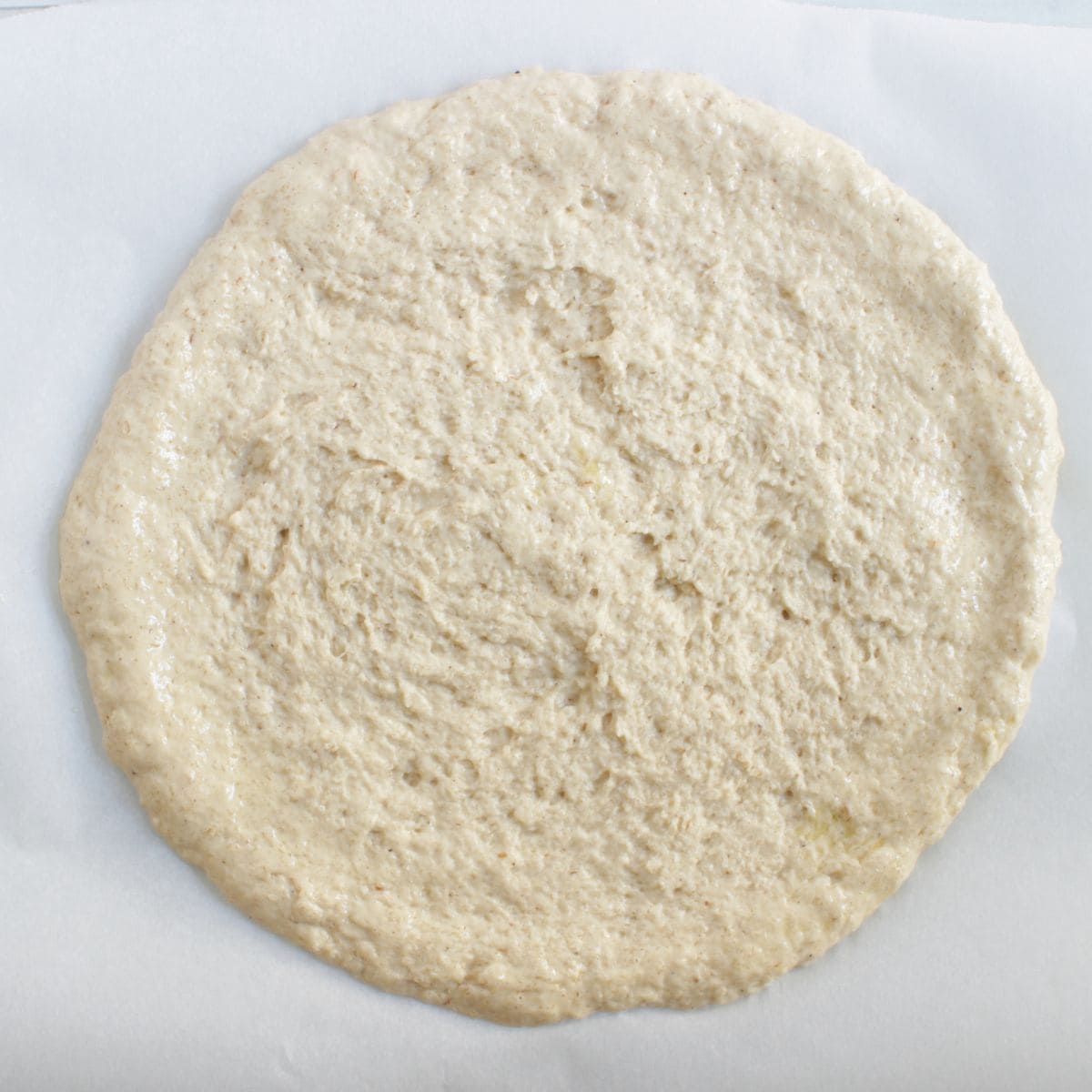
3. Mix wet with dry and press out on parchment paper.
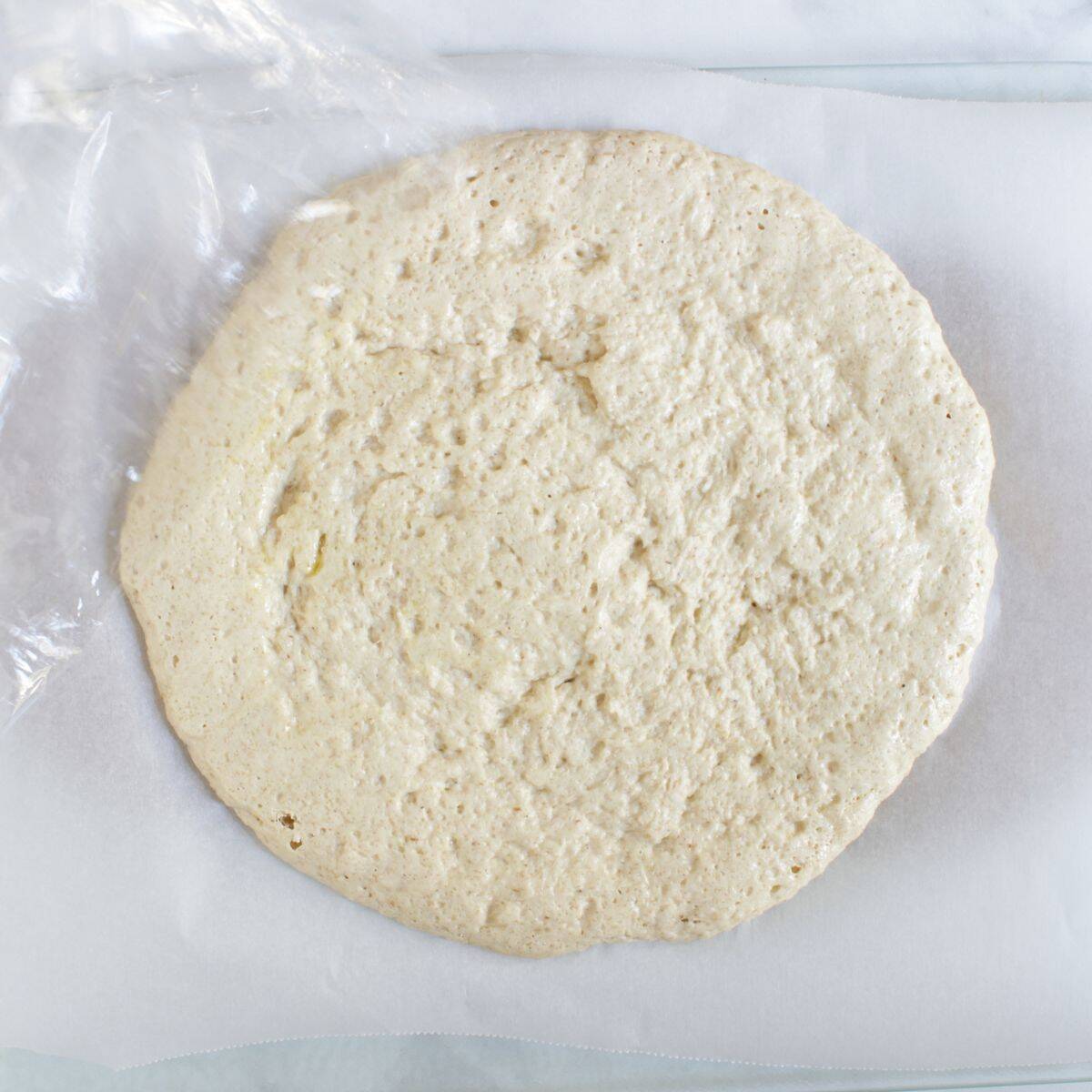
4. Cover with oiled plastic to rise. Remove plastic and transfer to a hot stone or pan.
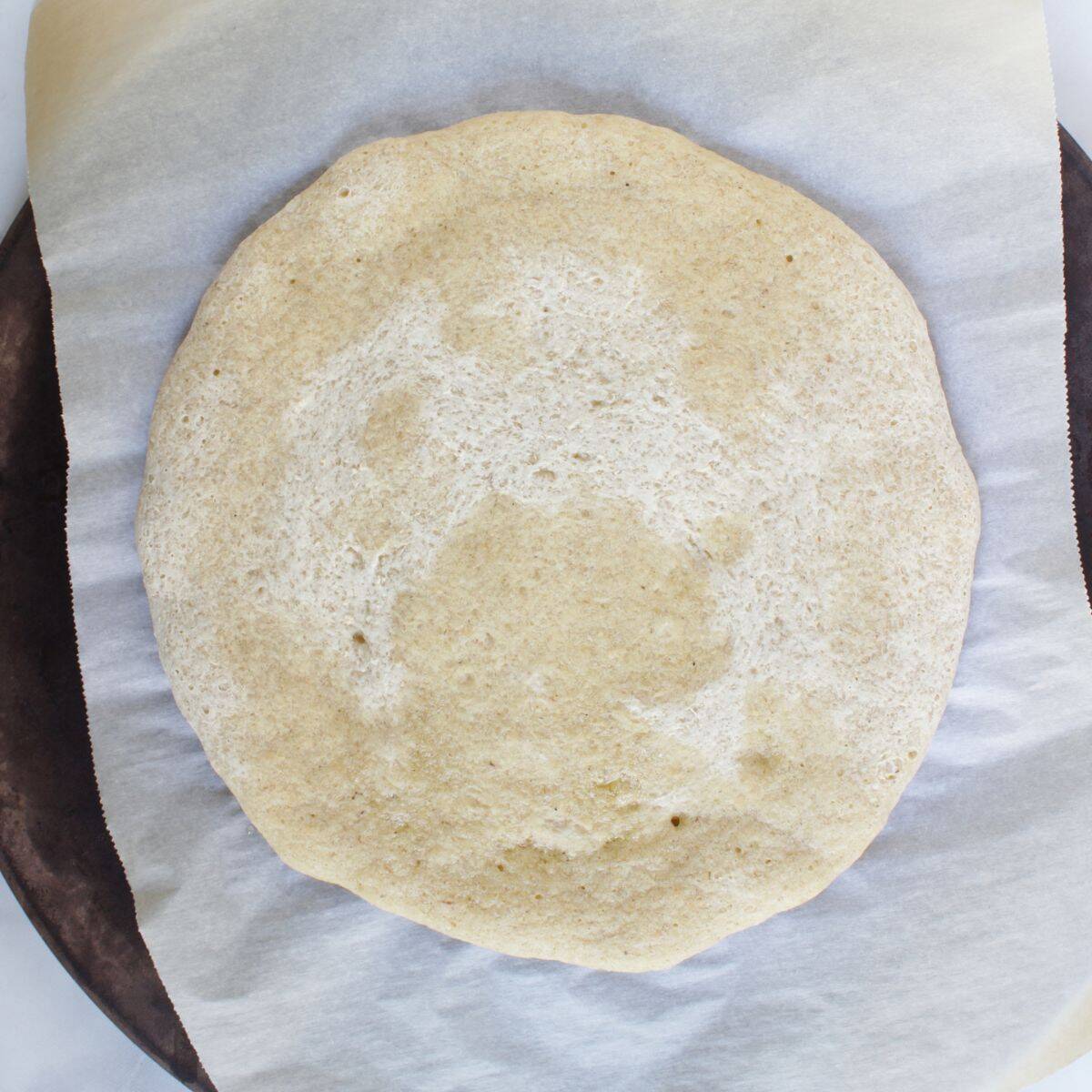
5. Bake for 5 minutes.
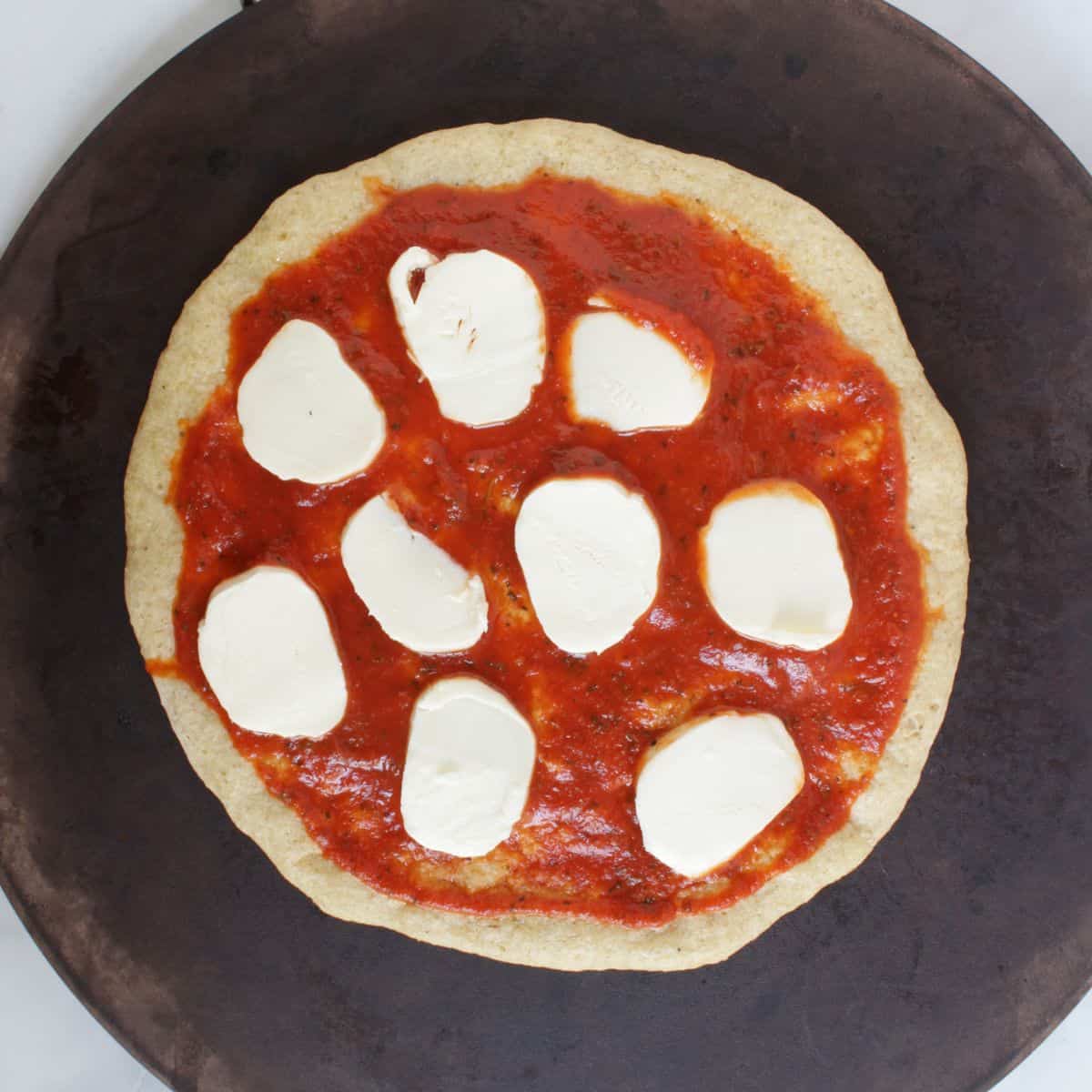
6. Remove parchment and add toppings.
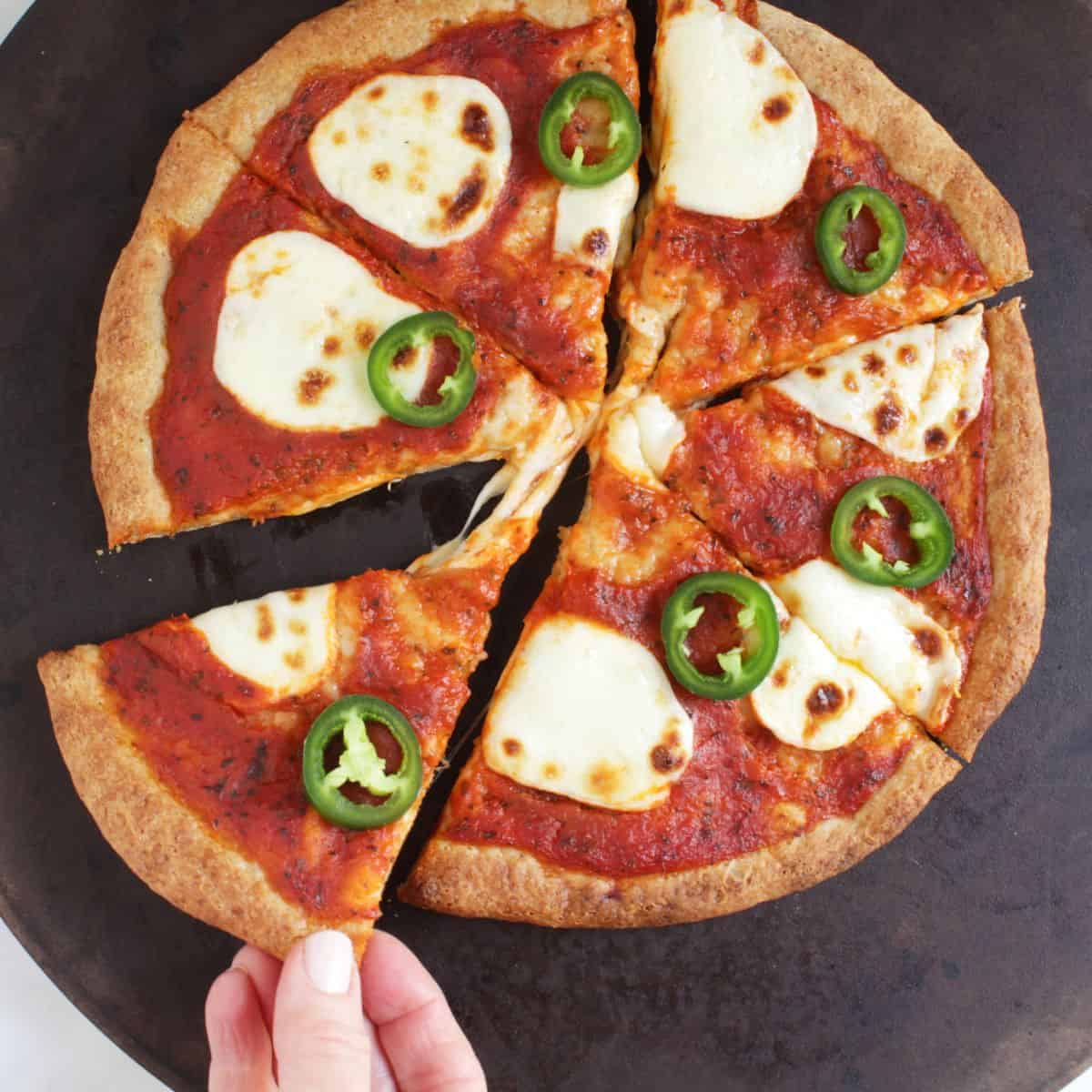
7. Return the pizza to the hot oven until the toppings have finished cooking.
Hint: The batter will be very soft and moist when it is first mixed. While it rests to rise, the flour and psyllium husk will absorb moisture, and you'll have a nice pizza dough.
Gluten-Free Pizza Toppings
While what to put on your pizza is not the focus of this article, the sky is the limit! Use your imagination, or stick with one of these tried-and-true favorites.
- Pepperoni and mozzarella on tomato sauce - Always check to make sure that your ingredients are gluten-free. It's not uncommon for sausages to contain wheat.
- Pineapple and ham on tomato sauce - I'm a Hawaiian-pizza girl. How about you? It seems to be a love-it or hate-it thing!
- Barbecue sauce with pulled meat - This might be chicken, pork, or beef.
- Breakfast pizza - Add sausage, bacon, cheddar or mozzarella cheese, and eggs cracked on top or scrambled.
What to Serve with Pizza
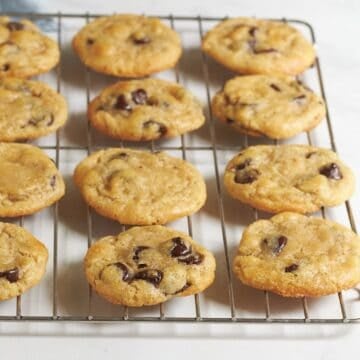
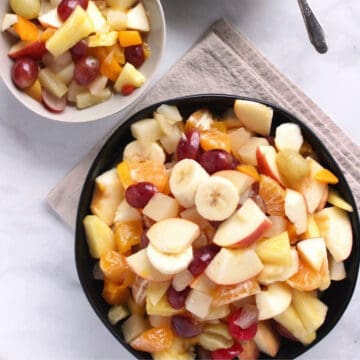
While pizza is great on its own, you could round out the meal with a salad and dessert.
Meal Prep
You can partially bake this gluten-free pizza crust and store it to add toppings and finish later.
Storage
Leftovers keep in the fridge for two or three days, just as well as with any other pizza crust.
I regularly store leftover slices of my gluten-free pizza with toppings in a zip-lock bag in the freezer. Then, when others are having pizza, and I don't have time to make my own, I just reheat a couple of slices in a toaster oven.
Top tip
Bake the gluten-free pizza crust until it looks done on top, before adding the toppings. This will prevent it from becoming soggy when you do add toppings.
Have your toppings ready to add as soon as you pull the parbaked crust from the oven, so the pizza stone or pan doesn't cool off too much.
Equipment
(As an Amazon Associate, I earn from qualifying purchases.)
You can make this gluten-free pizza dough either by hand or with a stand mixer. I love my stand mixer! It saves a lot of work!
A hot pizza stone is fantastic for baking gluten-free pizza! It offers support for the soft crust, and the heat bakes it nicely.
Recipe
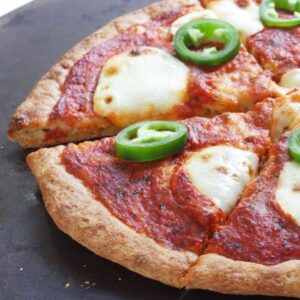
Gluten-Free Pizza Crust
Equipment
- 1 pizza stone optional but helpful
- 1 Stand Mixer optional but helpful
Ingredients
- 1⅓ cup Cathy's Gluten-Free Bread Flour
- 1½ teaspoons raw sugar
- 1½ teaspoons instant yeast
- ½ teaspoon fine sea salt
- ⅞ cup warm water (110℉/43℃)
- 1 teaspoon olive oil plus more for brushing edges
- ¾ teaspoon apple cider vinegar
Instructions
- Whisk the dry ingredients together in a medium mixing bowl.1⅓ cup Cathy's Gluten-Free Bread Flour1½ teaspoons raw sugar1½ teaspoons instant yeast½ teaspoon fine sea salt
- Add the water, a teaspoon of oil, and the vinegar to the dry mixture, and mix thoroughly. Run a stand mixer on second-to-low speed for 5 minutes, or mix it vigorously by hand.⅞ cup warm water1 teaspoon olive oil¾ teaspoon apple cider vinegar
- Place a sheet of parchment paper on a large cutting board or some other portable, flat surface. Generously sprinkle some gluten-free flour onto the parchment paper. Dump the dough out onto the floured parchment and press it with wet hands or a spatula, shaping it into a round pizza crust about 10 inches (25 cm) in diameter. Cover it loosely with a sheet of oiled plastic wrap and set it in a warm place for about 45 minutes to proof.
- Meanwhile, place a pizza stone or heavy baking pan into the oven. Preheat the oven to 475℉ (250℃), giving it plenty of time to heat up. (Mine takes about ½ an hour.)
- When your oven has preheated, and the dough has risen, slip the parchment paper with the dough carefully onto the hot pizza stone or pan. Optionally, brush the edges with a little oil to help them brown. Bake it for 5 minutes with the parchment paper.
- Remove the parbaked pizza crust from the oven, with the stone or pan. Set it on a heat-protected surface. With the aid of a flat lifter, slip the parchment paper out, so the crust will now be in direct contact with the hot surface as it finishes baking. Put your toppings of choice on the pizza, and return it to the hot oven for another 8 - 10 minutes, or until the toppings look ready.
Video
Notes
- Gluten-free dough is quite soft and sticky as you handle it. It will firm up while it sits as the flours and psyllium husk absorb moisture. You don't need to add more flour.
- Partially baking the crust before adding toppings helps to keep it from becoming soggy inside.
- Have your toppings ready, so you can add them quickly while the pizza stone is hot.
Sarah Palmer says
Can this recipe be frozen and used later, my thought was to par bake the crust and then put the toppings on to freeze and then my daughter could thaw and use.
Cathy Brak says
Yes, it certainly can. As long as your toppings freeze well - and most pizza toppings do - this would be a very good plan. She wouldn't even need to thaw it. I just bake my frozen pizza for 10 - 12 minutes or so, in a hot oven, about 425 F. Watch it closely, because ovens vary.
Cathy Brak says
This recipe is the best-tasting, best-textured, easiest to make pizza crust I have ever tried!