

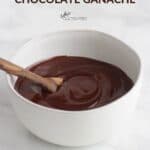
I love this gluten-free chocolate ganache recipe because it's so easy to make! The simple combination of two ingredients, semi-sweet baking chocolate and heavy whipping cream in roughly equal amounts when measured by weight, yields such decadence! You may add a dash of salt, if you like.
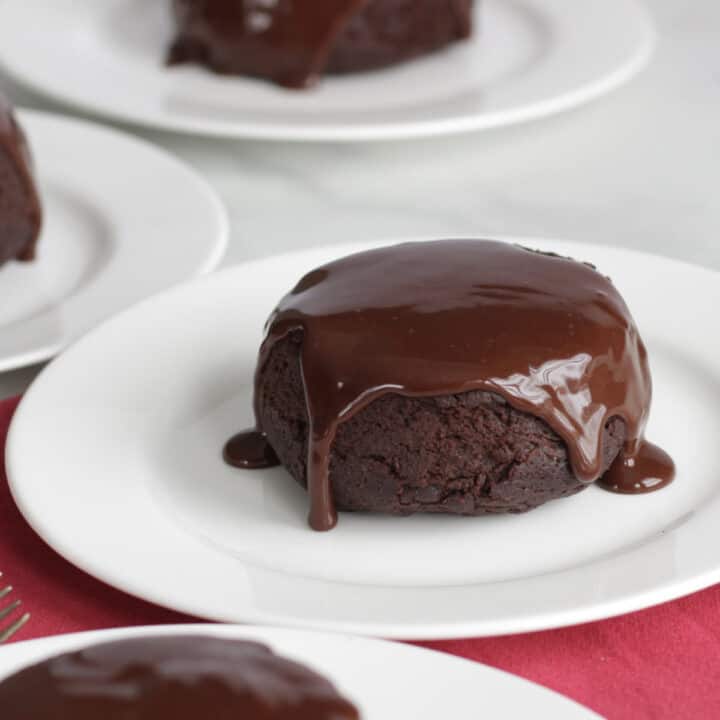
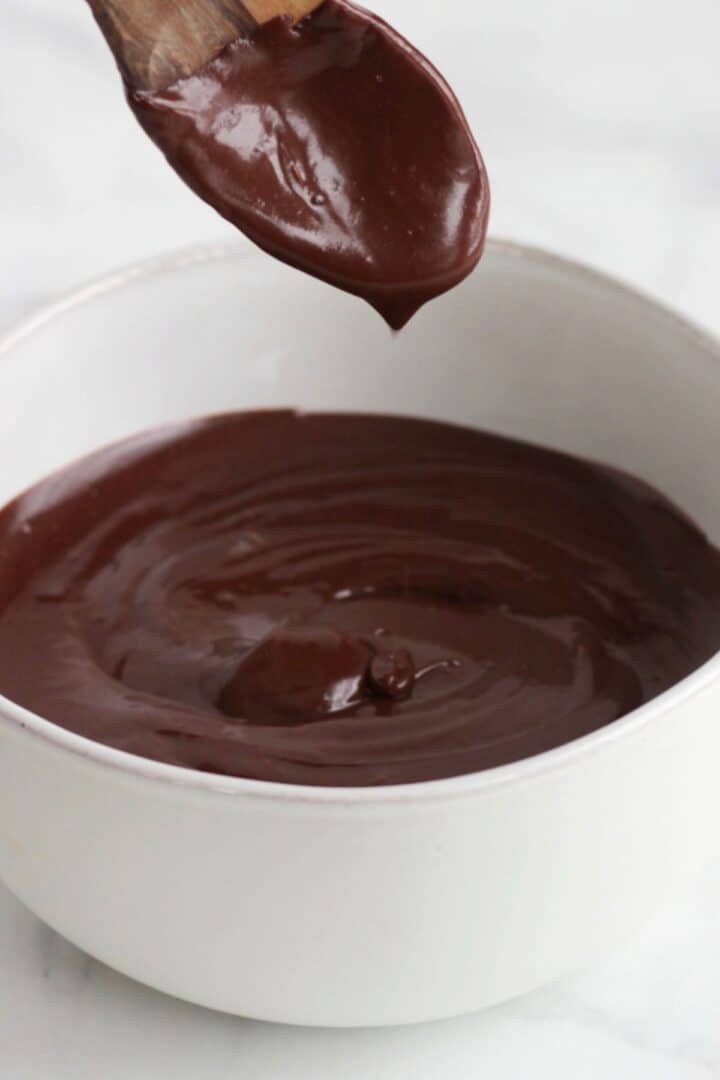
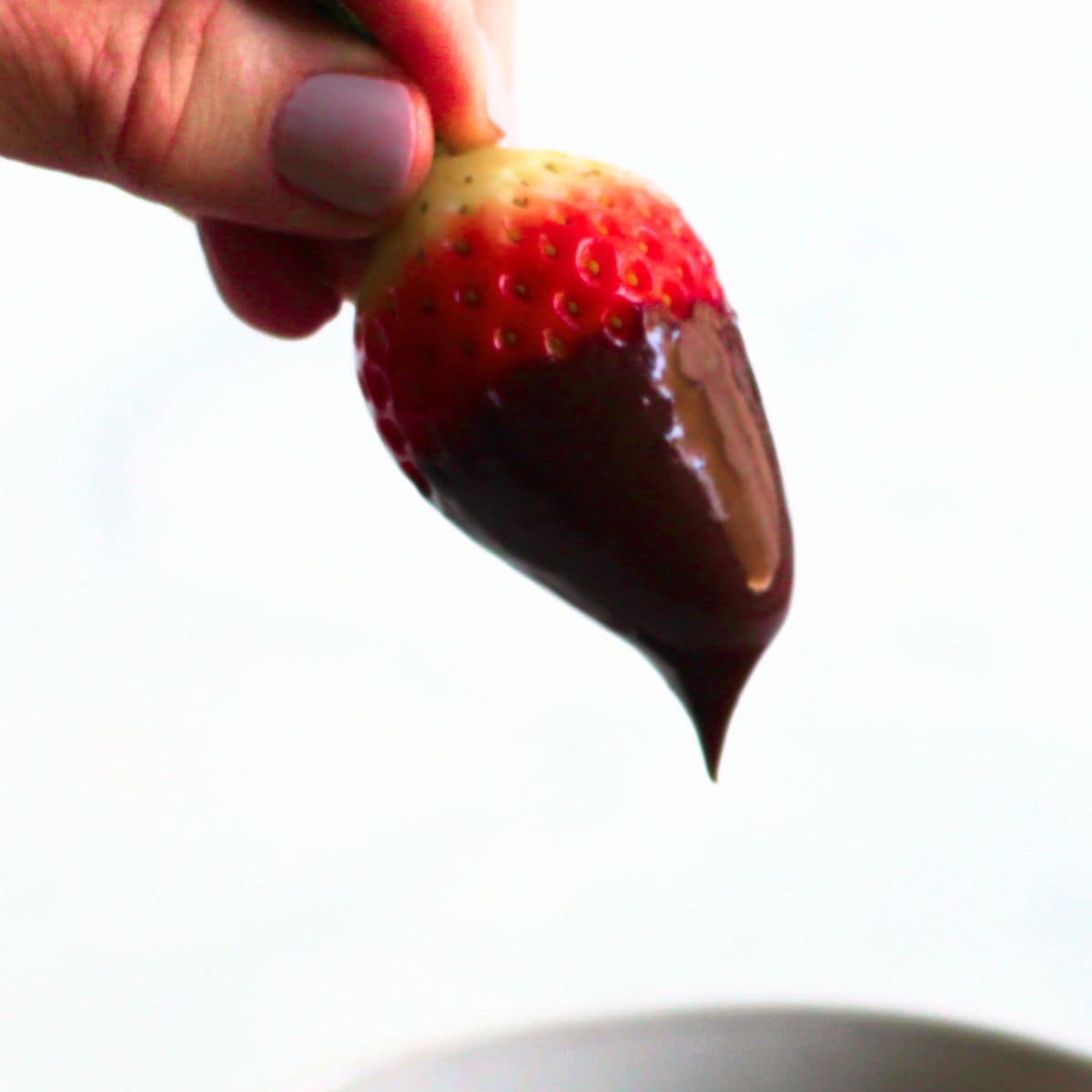
Chocolate Ganache Icing is a rich, two-ingredient dark chocolate liquid that's perfect to pour over cakes, cupcakes, and ice cream. It's also great for dipping strawberries or other fruit. As ganache cools and thickens, it can be used as a filling between cake layers or even whipped into a beautiful frosting. Chilled, it becomes truffles!
Ingredients
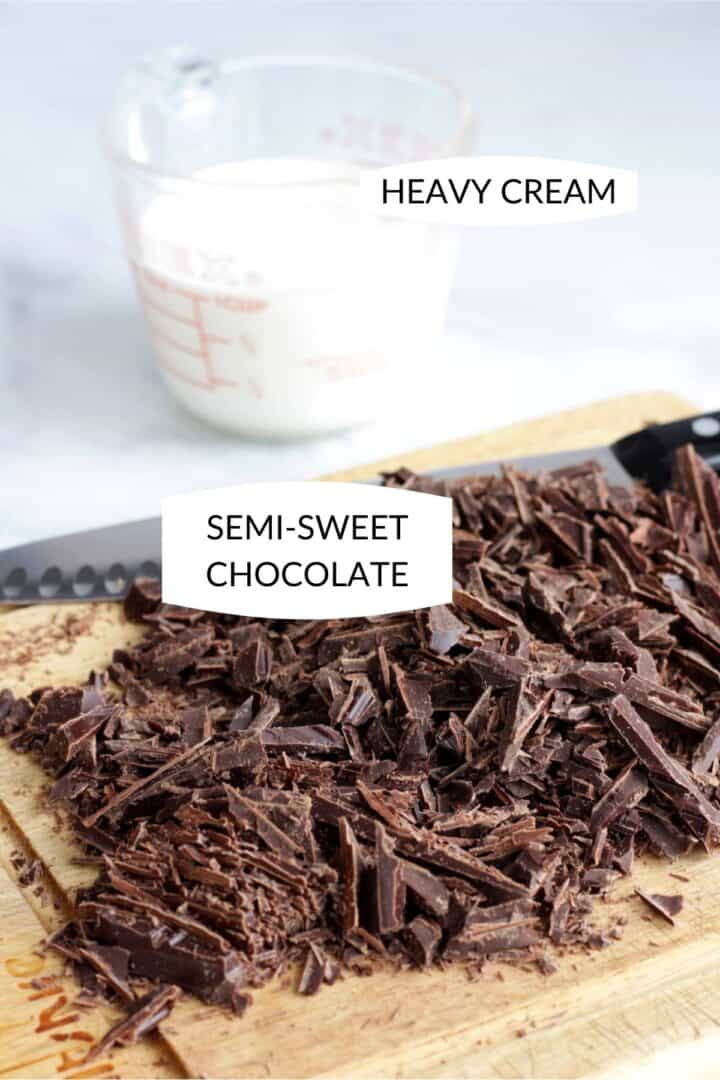
- Semi-sweet Baking Chocolate - Use semi-sweet or bittersweet baking chocolate.
- Heavy Whipping Cream - Cream is labeled differently in different countries. In Canada, I use 35% whipping cream. It might also be called heavy cream or heavy whipping cream. Use something that has 30% fat content or greater.
Most icings and frostings contain copious amounts of powdered sugar. I find this to be disappointing as we learn more and more about how damaging sugar is to our health.
Now, I do realize that there is some sugar in semi-sweet chocolate. However, with this recipe, we can enjoy a little sweetness in a thin layer rather than the heaps of sweet frosting we so typically encounter on fancy pastries. I don't have any powdered icing sugar in my cupboard, and I'm always on the lookout for ways to reduce sugar while still enjoying delicious food.
Instructions
Heat cream on the stovetop until it's just steaming. Little bubbles may form around the edges, but don't let it boil. A microwave won't heat it evenly. Pour it over chopped chocolate, or remove the pan from the heat and add the chocolate to the cream.
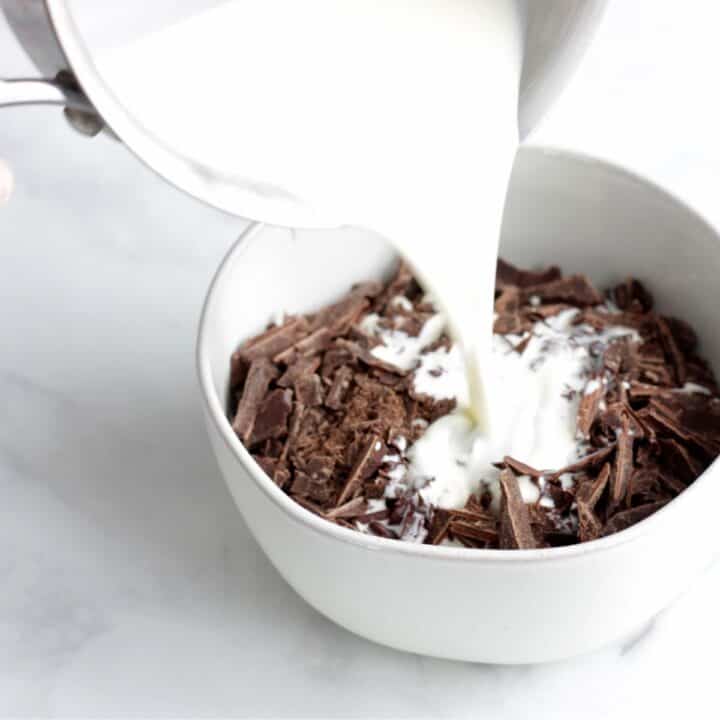
Cover the bowl of hot cream and chopped chocolate to keep the heat in, and let it sit for 2 or 3 minutes while the cream melts the chocolate.
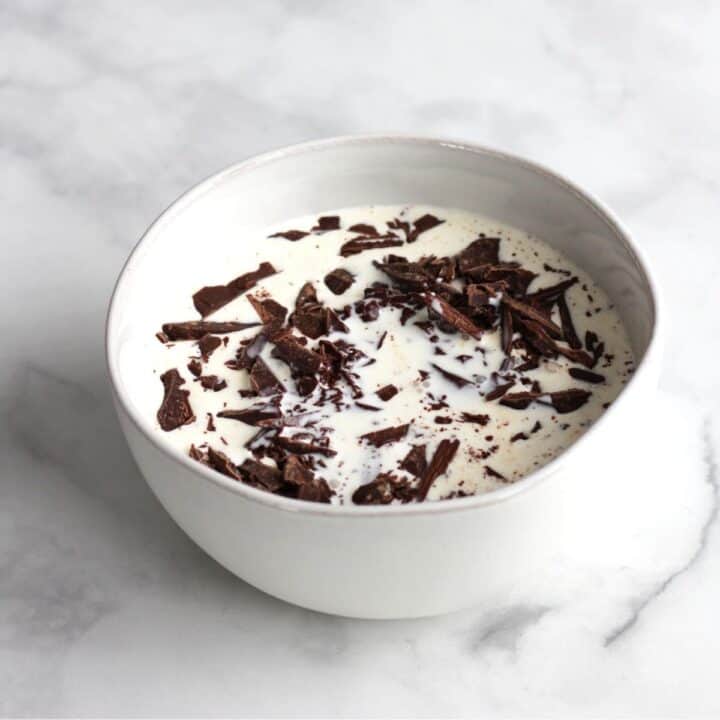
Stir the melted chocolate and cream together, and you have chocolate ganache icing!
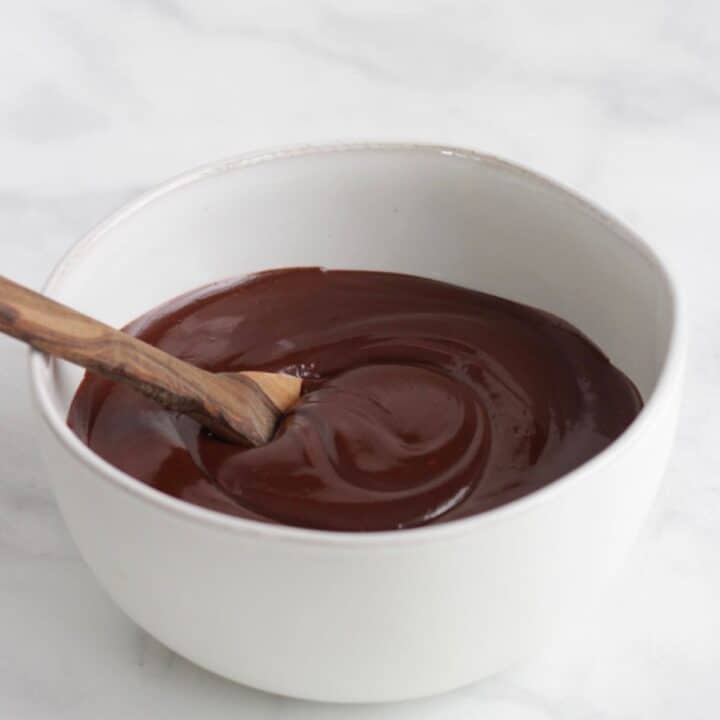
Pour ganache over a cooled cake while the ganache is still warm if you want it to be thin and run down the sides. Also, use warm ganache for any drizzled effect you might like.
Chocolate ganache will thicken as it cools. Then it's more suitable for spreading as a filling between cake layers.
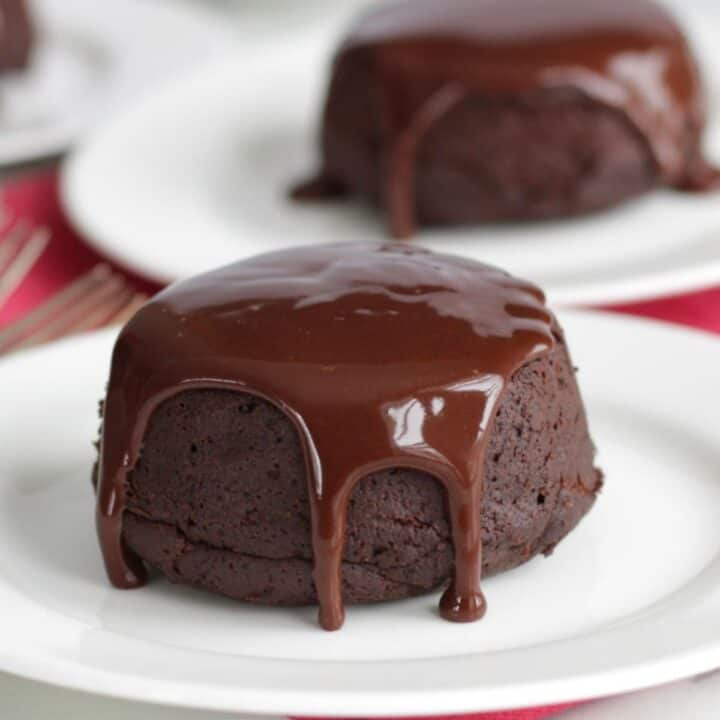
Chocolate Ganache Cake Frosting
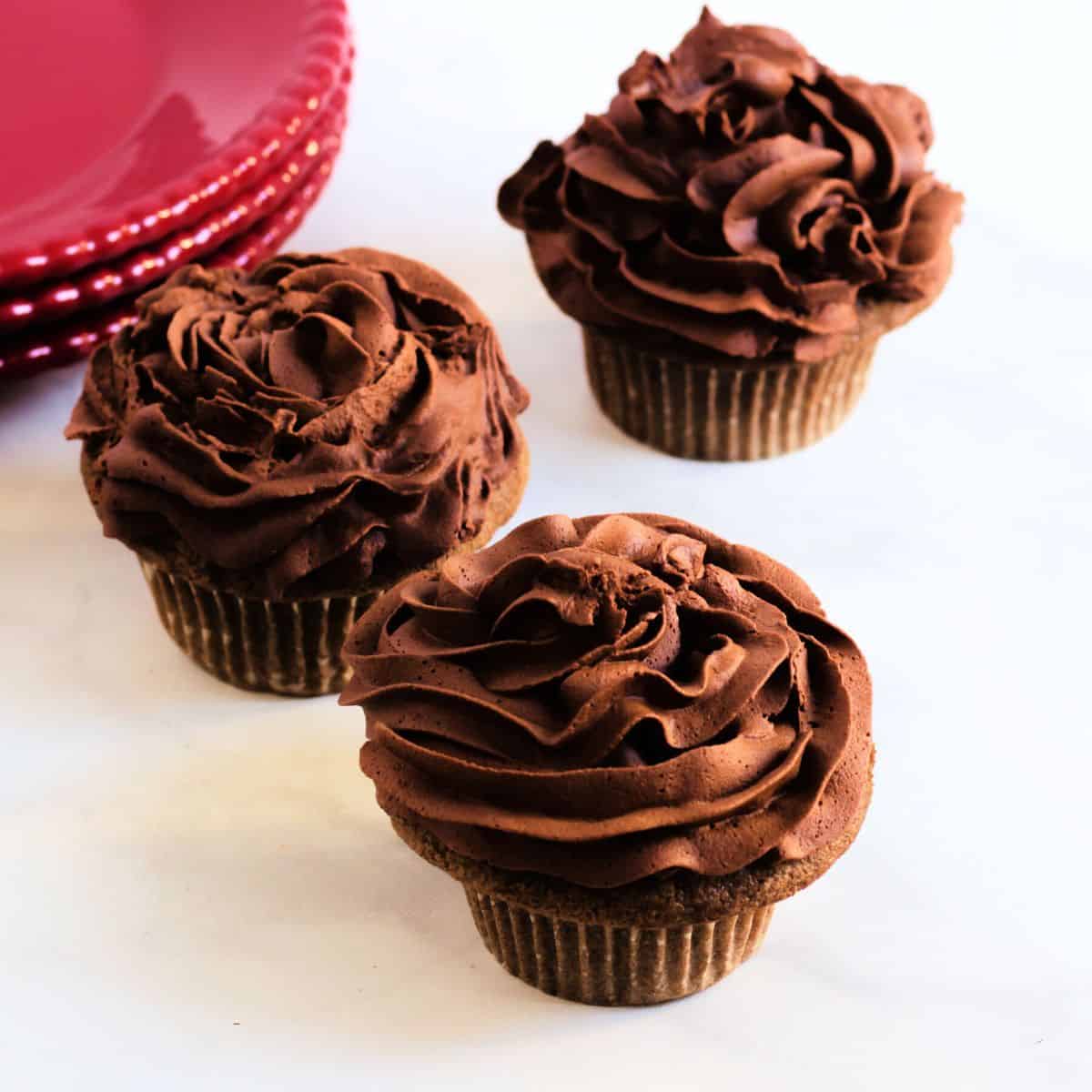
To turn your chocolate ganache icing into ganache frosting or chocolate filling, allow it to cool completely. Then, whip it on high speed until it becomes fluffy and forms peaks when you lift the beater out.
FAQ's
Chocolate ganache is gluten-free as long as the ingredients used to make it are gluten-free. Well, obviously, right?! Chocolate and cream should be gluten-free. However, you need to check. Chocolate that has been processed in a facility that also processes wheat can cause a problem for people with celiac disease.
Technically, chocolate ganache can be kept at room temperature for a couple of days. However, I put it into the refrigerator if I'm keeping it overnight, just to be safe. Moisture in the cream could promote microbial growth.
If I'm keeping chocolate ganache for more than a week, I freeze it. It can be frozen for up to a month without deteriorating in quality. Thaw it in the fridge and then bring it up to room temperature before using.
Yes, chocolate ganache can be successfully reheated. Ideally, allow it to come to room temperature first. Then reheat it very gently over low heat, stirring it frequently to keep an eye on it. Avoid getting any water into it, because water causes chocolate to seize.
Top tip:
Allow the chocolate ganache to cool to room temperature
before covering it with plastic wrap, so you don't get any condensation into it.
Where can I use Chocolate Ganache?
- Chocolate Cheesecake
- Molten Chocolate Lava Cakes
- Gluten-Free Chocolate Cake
- Christmas Yule Log
- Dipping Strawberries

Recipe
Chocolate Ganache Icing
Equipment
Ingredients
- 8 ounces semi-sweet baking chocolate finely chopped if necessary
- 1 cup heavy whipping cream
Instructions
- Chop up the chocolate finely.
- Heat the cream in a saucepan over low-medium until it's steaming but NOT boiling (145℉/63℃). Turn off the heat.
- Add the chopped chocolate to the steaming cream. Cover the pan to keep the warmth in. Let it sit for a few minutes for the chocolate to melt. This should take 2 to 3 minutes, depending on the size of the chocolate pieces. Then, stir it all together until it's smoothly blended.
Video
Notes
- Use a good-quality baking chocolate that melts well here, rather than chocolate chips.
- Chop the chocolate as finely as possible so that it will melt completely and evenly.
- Use heavy whipping cream, not half-and-half or anything lighter.
- Chocolate ganache will thicken as it cools. If you want to drizzle it over a cooled cake so that it runs down the sides, use it right away while the ganache is still warm. If you want to spread it out thicker over a cake layer, allow it to cool more.
- To make whipped chocolate ganache, allow it to cool at room temperature for two hours. It should be about the consistency of peanut butter. Then, whip it for 2 to 3 minutes, until it becomes lighter in color and texture and will hold stiff peaks. Use it to frost cupcakes or frost and fill a layer cake.
- Leftovers will keep in the refrigerator for a few days.
- If you must gently reheat it to use it again, stir it constantly over low heat, being careful not to let any water in. Water added at this point can cause the chocolate to seize.
Amy Brown says
Have you tried to make ganache with any milk substitutes like oat milk? Not only do I have celiac disease but I am lactose intolerant. Thank you.
Cathy says
I am so sorry, Amy. I have not tried to make ganache without dairy. I wish I could suggest a substitute, but that would be challenging. The high fat content in cream is key in this recipe. Do you like coconut?
Shimay says
The reply is a bit late, but refined coconut oil works too. It will just need to be served cold to retain its texture, in hot weather it will go really runny.
Cathy says
Thank you for the tip, Shimay! Refined coconut oil, at the right temperature, could work here. For those who might not be familiar with it, the nice feature of refined coconut oil is that it doesn't have the distinct flavour that unrefined coconut oil has.
For coconut oil to work in this recipe, it would need to be kept at precisely the right temperature; too warm and it would be runny, too cold and it would turn solid. Have you tried it to see what amount works best?